Structure & Foundation
Severe Floor Framing Damage Propped Up Instead of Repaired
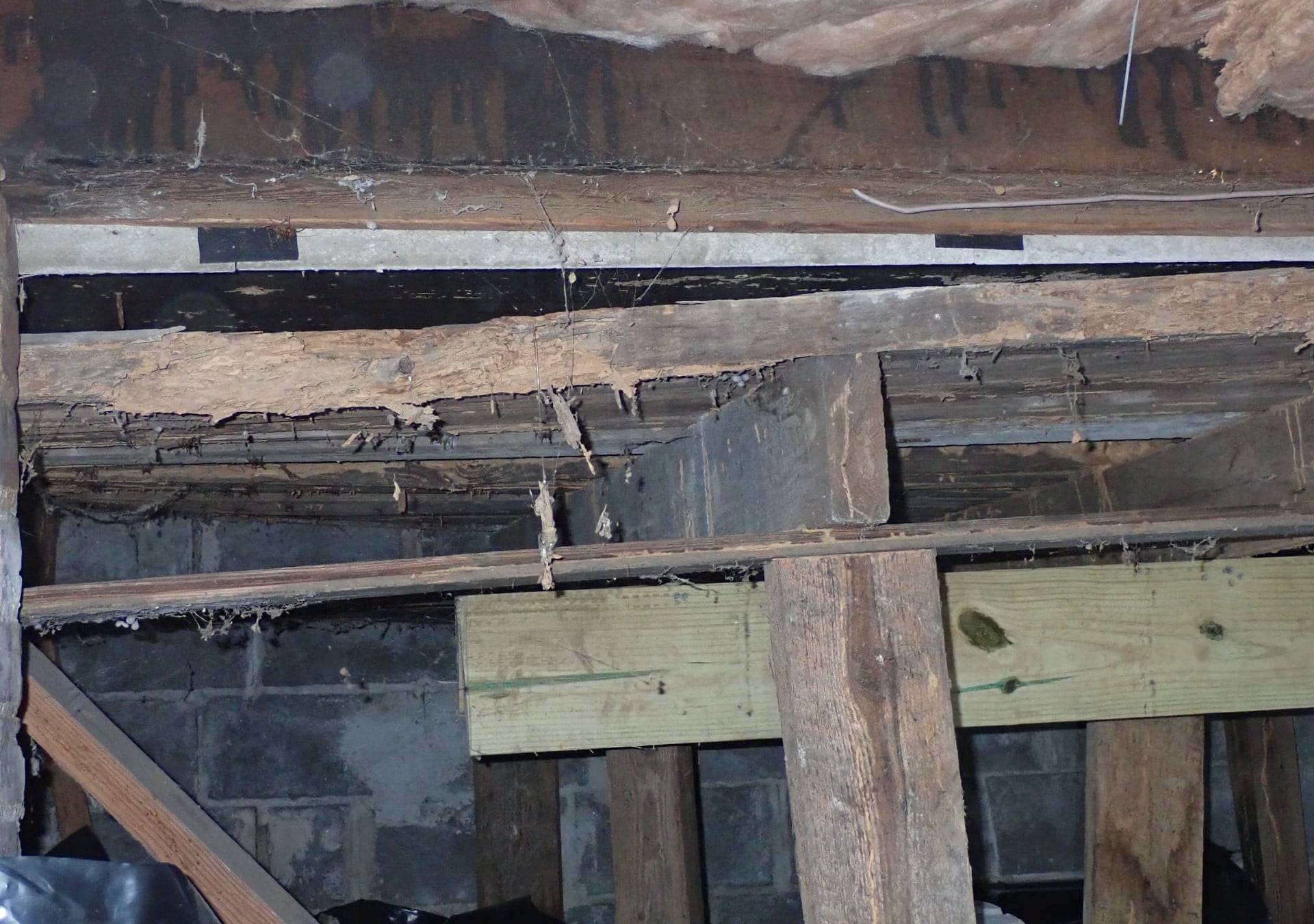
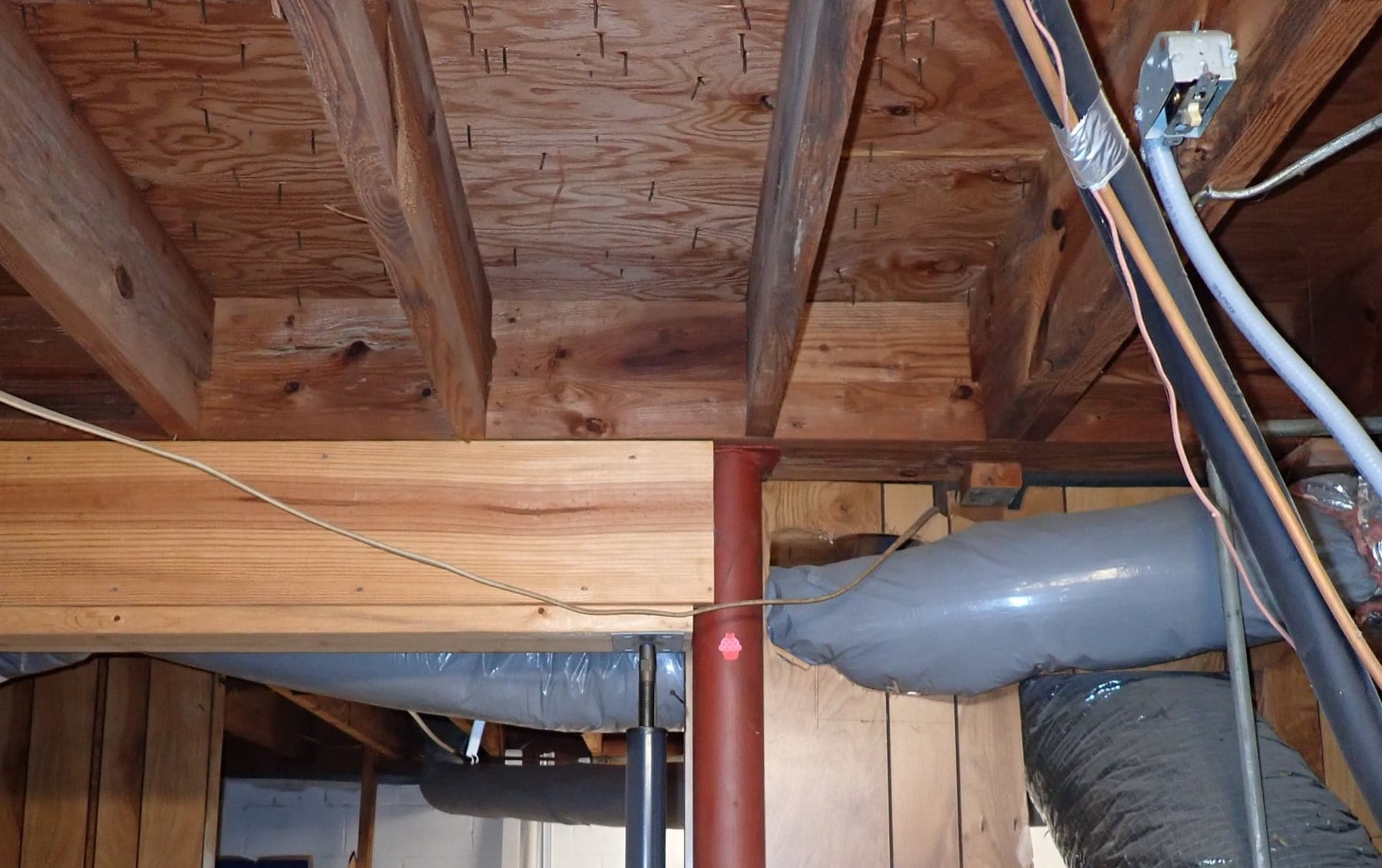
Damaged framing under a bathroom was still carrying load—held up by posts, blocks, and added lumber.
Read the House FileTHE HOUSE FILES · Structure & Foundation
Termite damage compromised a center floor joist; an added girder and jacks supported the damaged wood rather than repairing it.
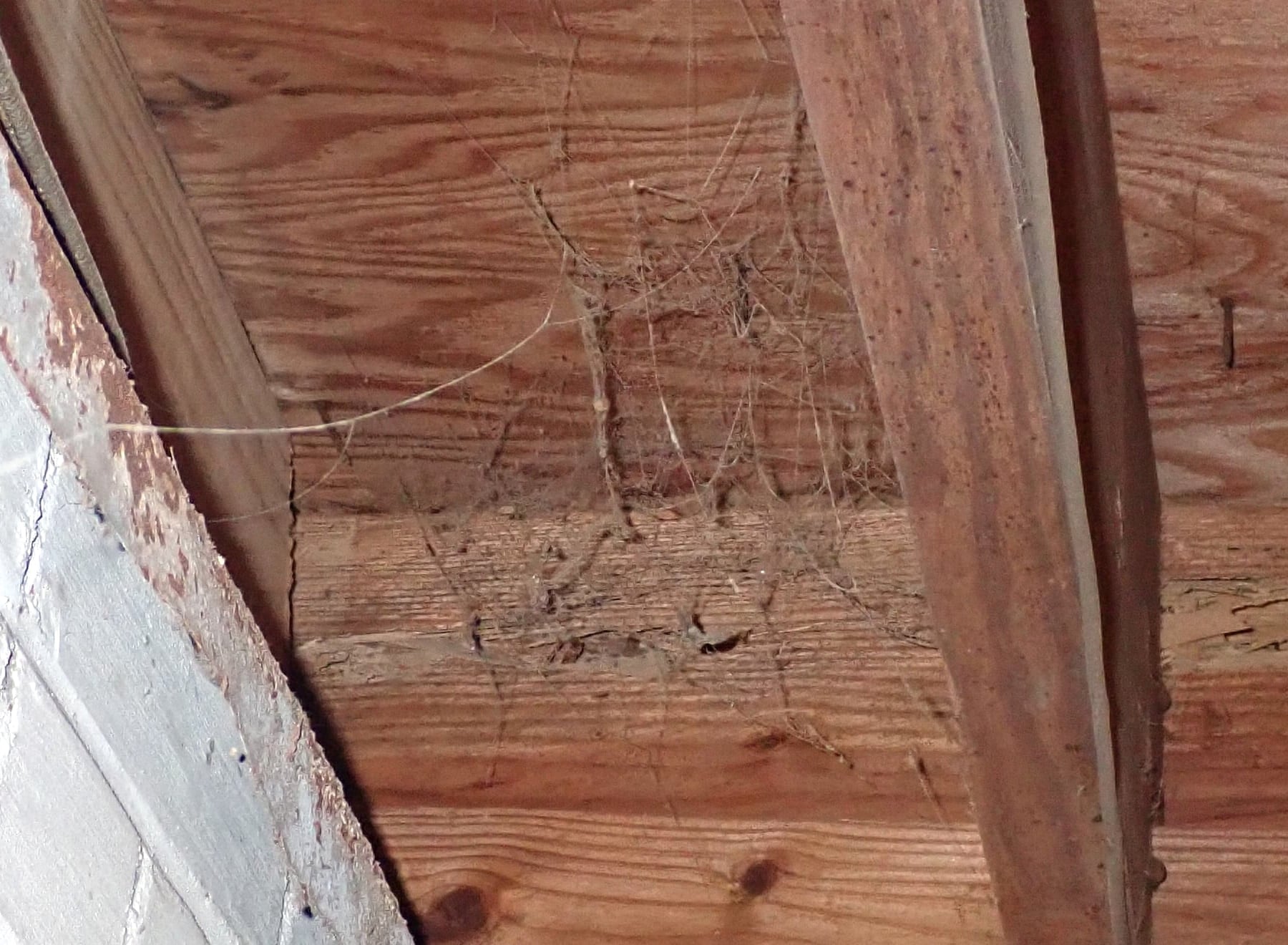
Termite damage had removed substantial material from a center floor joist. A reinforced girder and jack posts had been added underneath—but those supports were holding the damaged joist rather than repairing or replacing it.
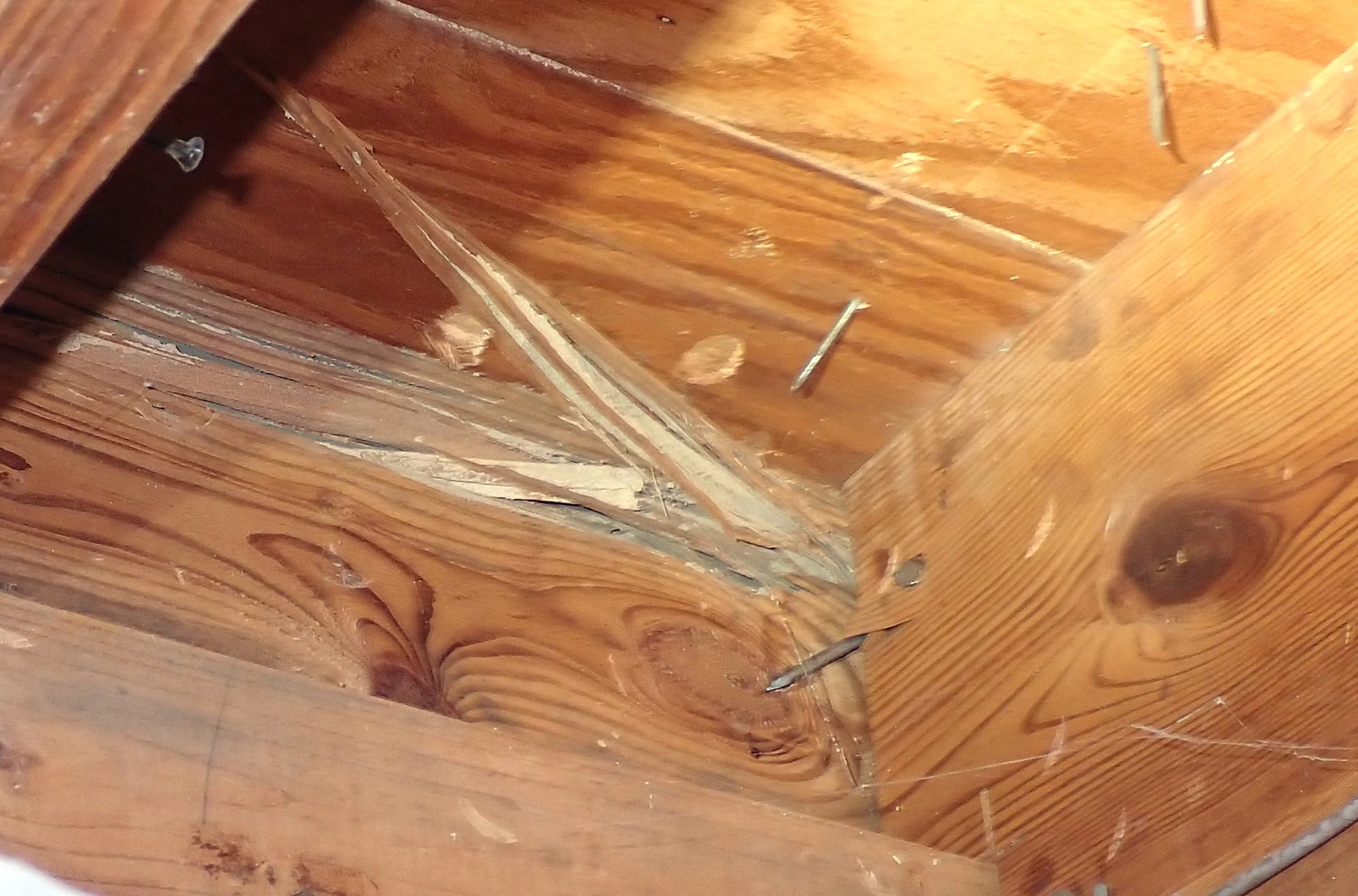
In the basement, a floor joist running through the center of the home showed significant termite damage—shredded, hollowed wood loss along the member.
The report stated that the structural integrity of the wood was compromised, and that a reinforced girder and floor jacks were installed but only supported the damaged wood.
A center joist is part of the floor’s primary framing. Supporting a termite-damaged joist may reduce movement, but it does not restore the wood that was destroyed.
This File does not claim the floor was about to collapse. It does claim a serious structural condition that needs proper repair of the damaged member—not only temporary support.
The report recommended that a licensed contractor evaluate and repair the damaged wood. A qualified pest-control professional should also assess treatment needs.
Do not treat existing jacks or an added girder as proof that the damaged joist was corrected.
Structure & Foundation
Damaged framing under a bathroom was still carrying load—held up by posts, blocks, and added lumber.
Read the House FileStructure & Foundation
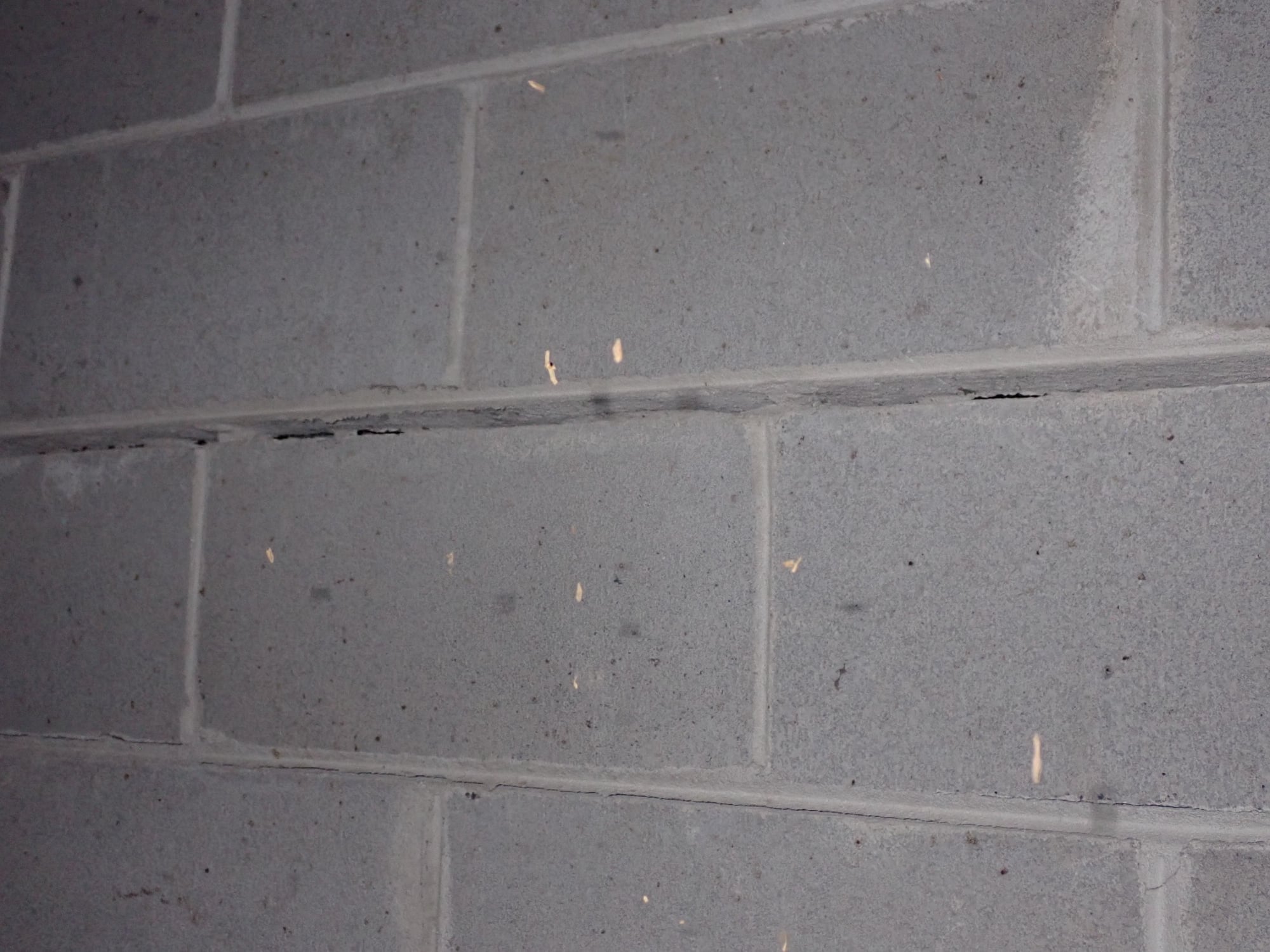
Horizontal separation and inward displacement in a concrete-block basement wall—reported as soil pressure pushing the wall inward.
Read the House File