
Amazon.com
Raco 4-Inch Square Flat Blank Cover (Metal)
Once splices are in a proper box, they need a blank cover. Most residential junction boxes are square and take a standard metal or plastic blank—not an octagon cover.
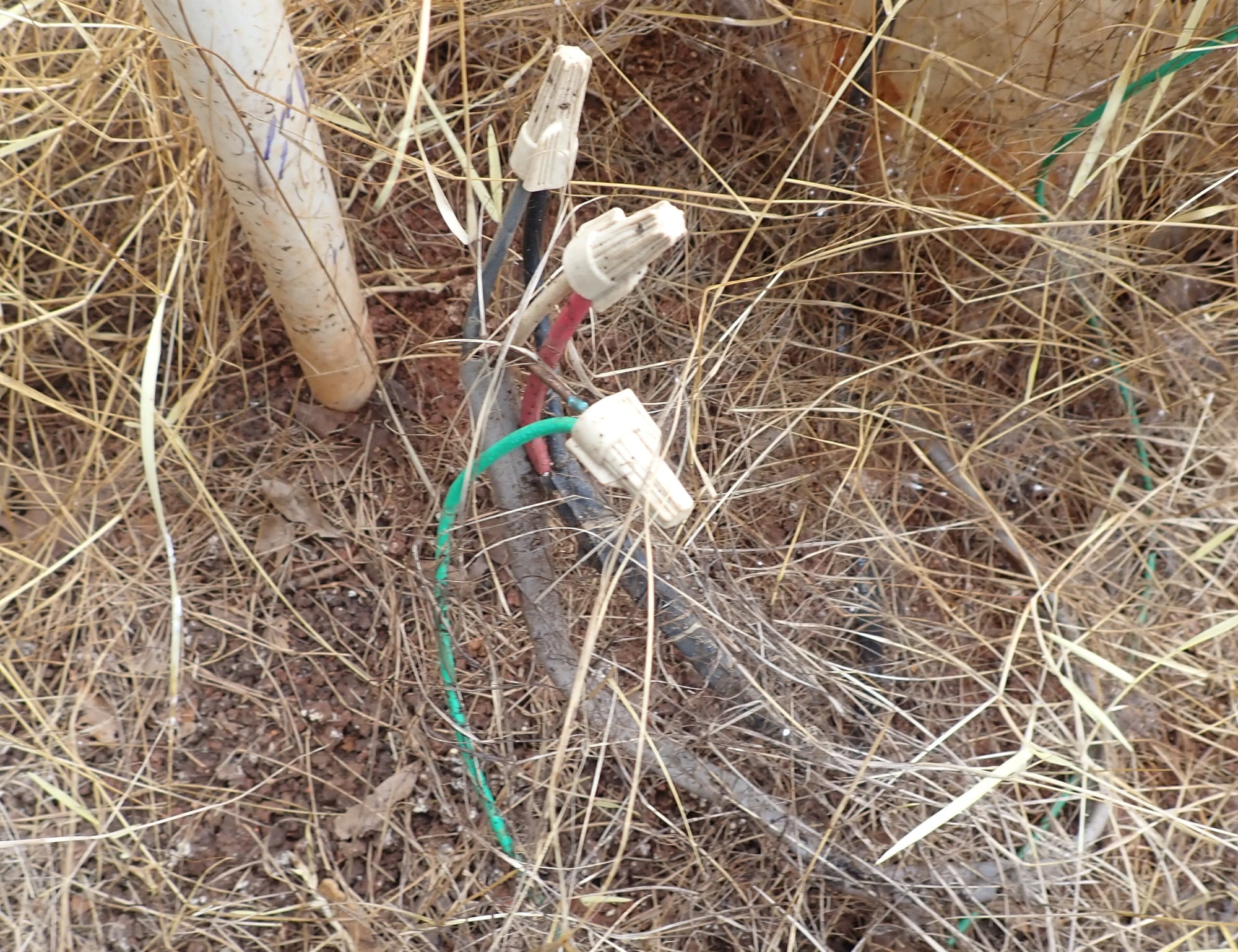
View on AmazonExposed outdoor wire connectors near grade—why an enclosure rated for the location matters.
Yes—ordinary exposed splices with wire connectors sitting outside a proper enclosure are a safety concern. Splices generally belong in an appropriate junction box or other enclosure listed for the location, with a cover, so the connection is protected, contained, and accessible. Outdoor or damp locations also need weatherproof methods and connectors rated for that environment—not indoor wire nuts left in the open.
PROMPT EVALUATION
Have a licensed electrician enclose and rework the exposed splice using methods and materials rated for the location. Outdoor exposure and connectors near the ground raise contact and moisture concerns even when active arcing is not documented.
Do not handle exposed connectors or assume the circuit is de-energized. Keep children and pets away from the area until it is corrected.
Wiring rules generally require conductor splices to be made in a box or enclosure (with limited exceptions such as certain listed direct-burial splice methods). An enclosure protects the connection from physical damage, helps contain sparks or heat if a connection fails, reduces accidental contact, supports cables when installed correctly, and keeps the joint accessible for future work.
For outdoor, damp, or below-grade locations, the enclosure, cover, fittings, wiring method, and connectors must all be appropriate for the environment. Placing ordinary indoor wire connectors into a generic box does not automatically make an outdoor splice acceptable—ratings matter.
This photograph shows wire connectors and conductors on or near the ground associated with well wiring. The inspection report described exposed well wiring splices that should be contained in a covered junction box. The report does not state that the conductors were confirmed energized at the moment of the photo.
During a real home inspection in the Abbeville area, well wiring splices were found exposed. The report stated the splices should be contained in a covered junction box.
The photograph shows several conductors joined with twist-on wire connectors resting on or near dry ground/vegetation, with a green insulated conductor nearby. Observed: exposed connectors outside an enclosure. Not established by the photo alone: whether the circuit was energized at that moment, conductor ampacity, or the full well-equipment wiring method.
Amazon.com
Once splices are in a proper box, they need a blank cover. Most residential junction boxes are square and take a standard metal or plastic blank—not an octagon cover.
View on AmazonAmazon.com
A cover alone does not fix exposed splices that were never boxed. Use this after the wiring is enclosed in a listed junction box.
View on AmazonAs an Amazon Associate I earn from qualifying purchases. These are optional examples related to this topic—not an endorsement by Amazon, and not a substitute for a qualified professional when the repair calls for one.
Electrical
Status Immediate Safety Concern
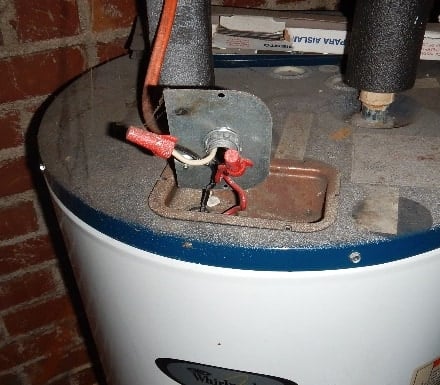
Open electrical covers and exposed splices on a water heater create a shock and fire risk at an always-on appliance.
View case fileElectrical
Status Prompt Evaluation
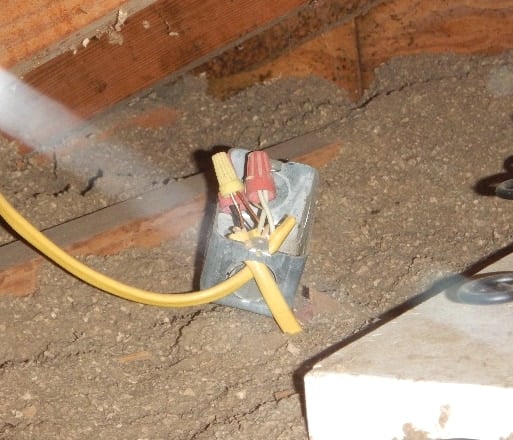
Open electrical junction boxes sitting in attic insulation leave splices exposed where heat and combustibles meet.
View case fileElectrical
Status Immediate Safety Concern
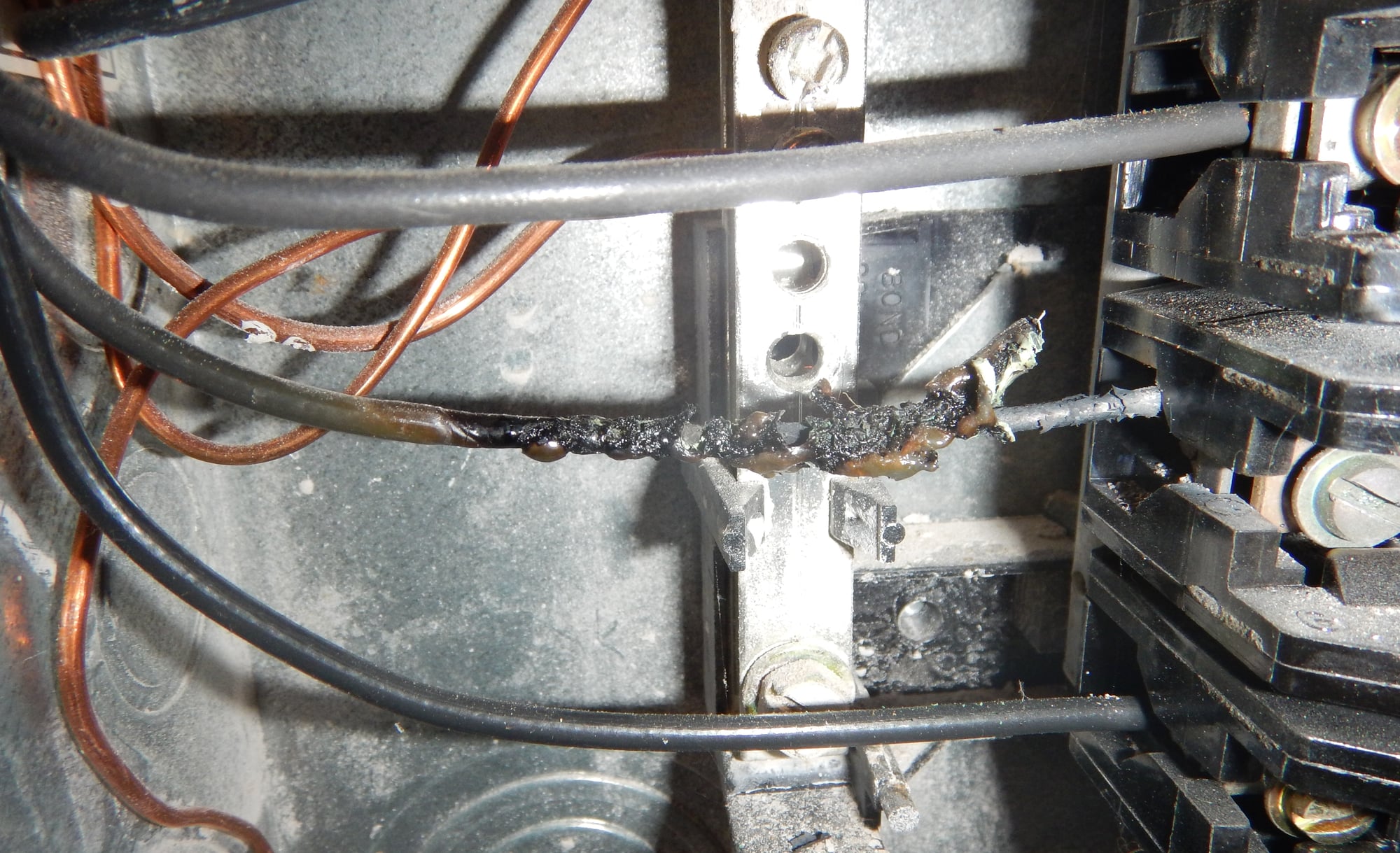
A conductor inside a service panel was hissing, burning, and melting—an immediate fire hazard that needs a licensed electrician, not a DIY patch.
View case fileElectrical
Status Plan for Correction
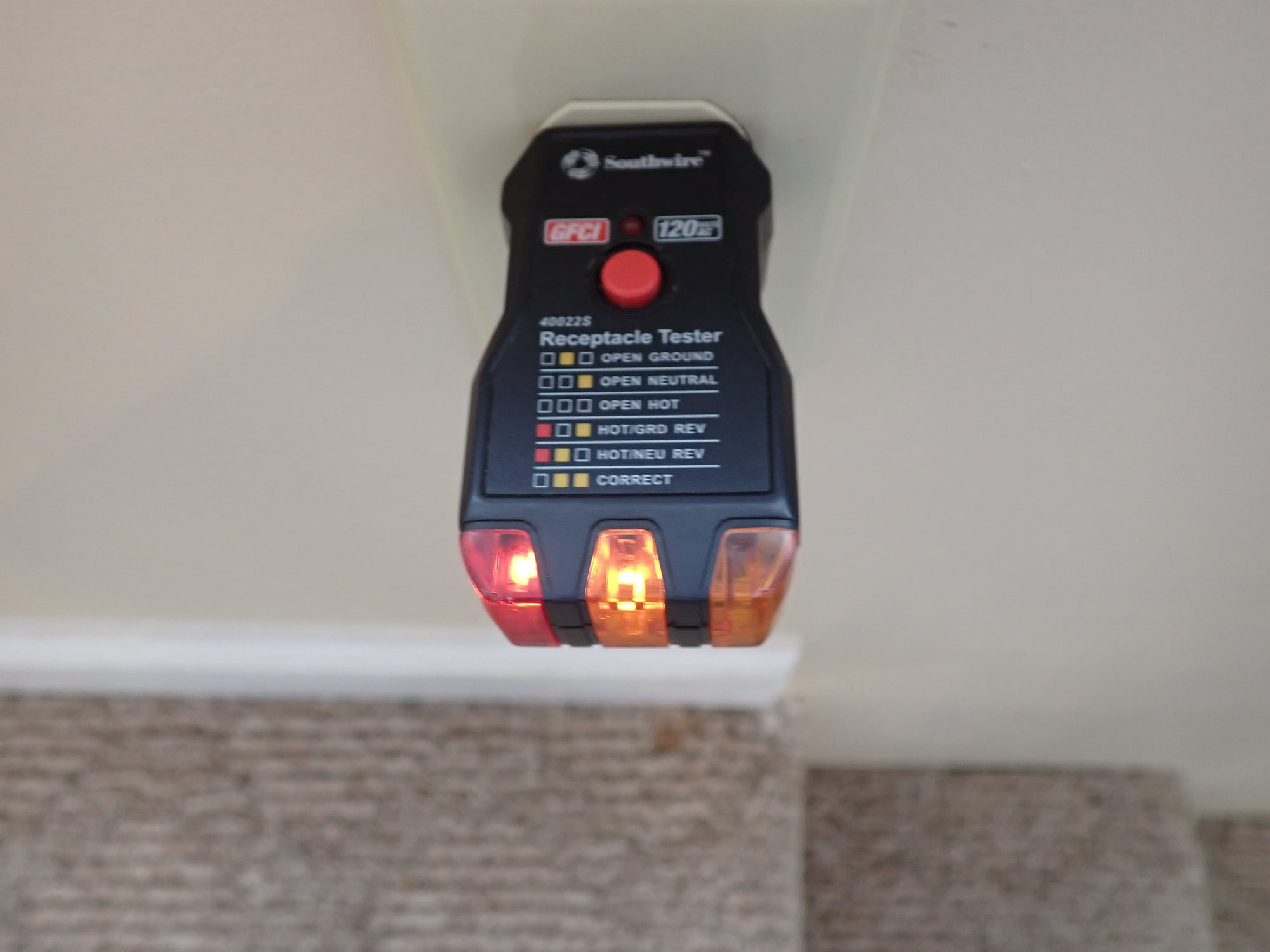
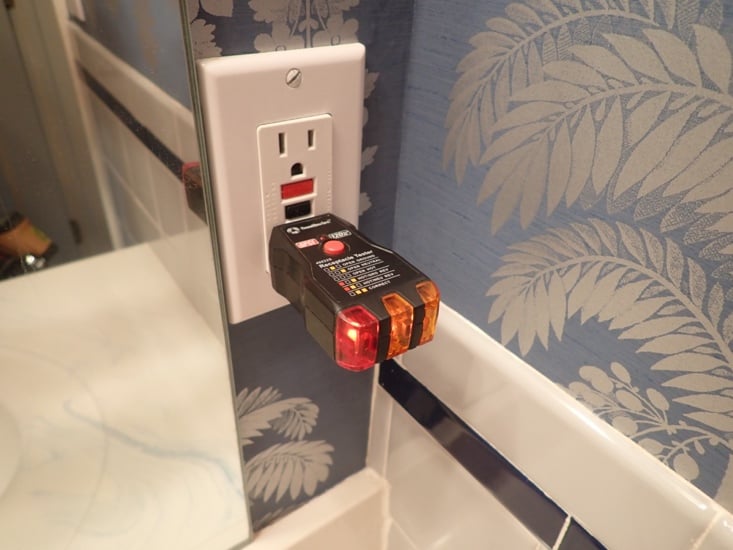
A plug-in tester reading of hot and neutral reversed—what it means, why it matters, and what a licensed electrician should correct.
View case fileElectrical
Status Plan for Correction
A three-prong outlet that tests as having no equipment ground—common in older homes with two-wire wiring. Here’s what it means, why it matters, and how it’s corrected.
View case file