Double-Tapped Breakers: When Are Two Wires on One Breaker a Problem?
Two conductors on one breaker terminal need listing verification—many breakers allow only one wire.
Electrical Panel
Circuit Breaker
Double Tap
Loose Connection
Double-Tapped Neutral
Brandon Vaughn•Licensed Home Inspector
Published July 13, 2026 · Updated July 2026
Photographs and observations on this page come from a real home inspection, explained by a working inspector.
Direct Answer
Not every breaker with two wires is automatically defective—but many breaker terminals are listed for only one conductor. When two conductors share a terminal that is not designed and marked for that use, the connection may not stay secure. A licensed electrician should confirm the breaker listing and correct an improper termination.
PLAN FOR CORRECTION
This should be evaluated and corrected if improper.
Have a licensed electrician check whether each affected breaker is listed for the number and type of conductors installed, then correct any terminals that are not. This is a connection-integrity issue—not automatically an active fire emergency unless heat damage, arcing, or burning is also present.
Urgency
Plan correction
Next step
Have an electrician verify breaker listings
Who to call
Licensed electrician
How to Identify It
Two (or more) separate conductors under one breaker terminal screw
Conductors of different sizes sharing one terminal
A breaker that feels warm, shows discoloration, or has a burning smell nearby (do not keep probing energized parts)
Labels or embossing on the breaker body that show whether one or two conductors are permitted
Crowded panel wiring that makes secure single-conductor terminations difficult
Why Further Evaluation Is Needed
Secure contact at a breaker terminal depends on the terminal being used as listed. NEC practice requires terminals to be used with the number and type of conductors for which they are identified (see listing/labeling rules such as NEC 110.3(B) and terminal rules such as 110.14(A)). Many breakers are listed for one conductor; some Square D and Eaton/Cutler-Hammer models, among others, are specifically listed and marked for two conductors of defined sizes and materials.
If two wires share a terminal not designed for them, one or both can loosen, overheat, arc, or become unreliable. A photograph alone cannot establish conductor size, torque, aluminum vs copper rules, or the internal condition of the breaker.
What a Proper Correction Should Accomplish
Identify the exact breaker model and read its listing/labeling for permitted conductor count, size, and material
If the terminal is not listed for the installed conductors, separate the circuits onto proper breakers or use an approved pigtail/method per the electrician’s evaluation
Ensure each termination is tight and compatible with the conductor material
Correct any heat-damaged components if evaluation finds them
Do not force a second wire under a terminal as a DIY “upgrade” without verifying the listing
Example From an Inspection
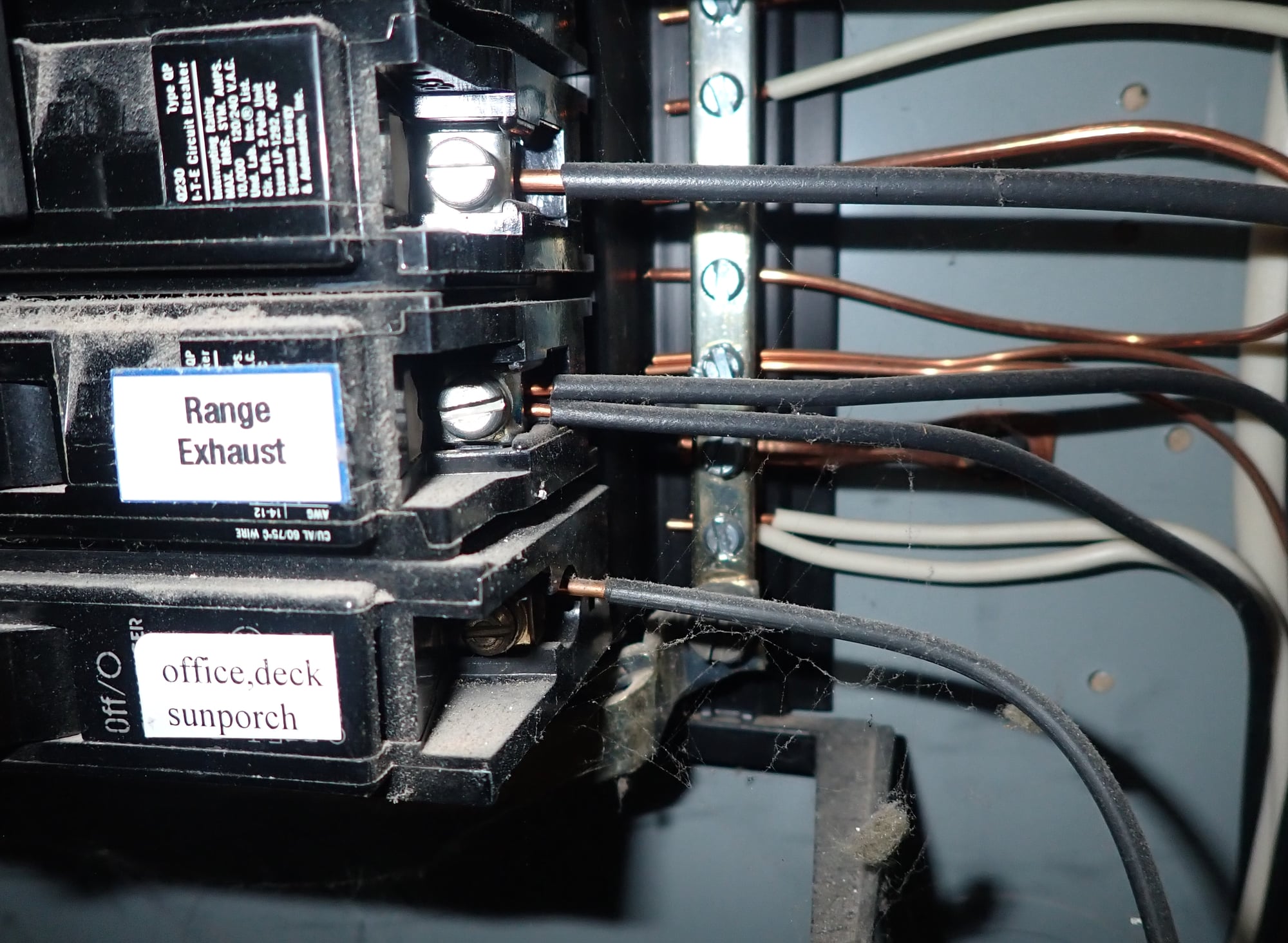
During a real home inspection in the , three breakers in the panel were reported as double-tapped—more than one conductor on a single terminal not rated for multiple conductors. The report noted that this can cause loose connections and overheating and recommended evaluation and correction by a licensed electrician.
The photograph shows two black conductors under one breaker terminal (circuit labeled for a range exhaust). Observed: two conductors at the terminal. Evaluation still required: whether that exact breaker is listed for those conductors and whether they are properly secured.
Frequently Asked Questions
What is a double-tapped breaker?
A double-tapped breaker is a circuit breaker with two wires connected under a single terminal that is often designed and listed for only one conductor. Inspectors flag it because the connection may not stay secure over time.
Are double-tapped breakers against code?
It depends on the breaker. Some breakers are specifically listed and labeled to accept two conductors, and in that case the connection can be acceptable. Many are not, and using them for two wires is improper. A licensed electrician can confirm the breaker's listing.
Is a double-tapped neutral the same problem?
A similar concern applies to the neutral bar. Neutrals are generally intended to land one wire per terminal, so two neutrals under one screw (a double-tapped neutral) is a common related finding an electrician should correct.
Can I fix a double-tapped breaker myself?
Work inside an electrical panel carries shock and arc-flash risk and should be corrected by a licensed electrician, who can add a breaker, use a breaker listed for two conductors, or pigtail the wires as appropriate.
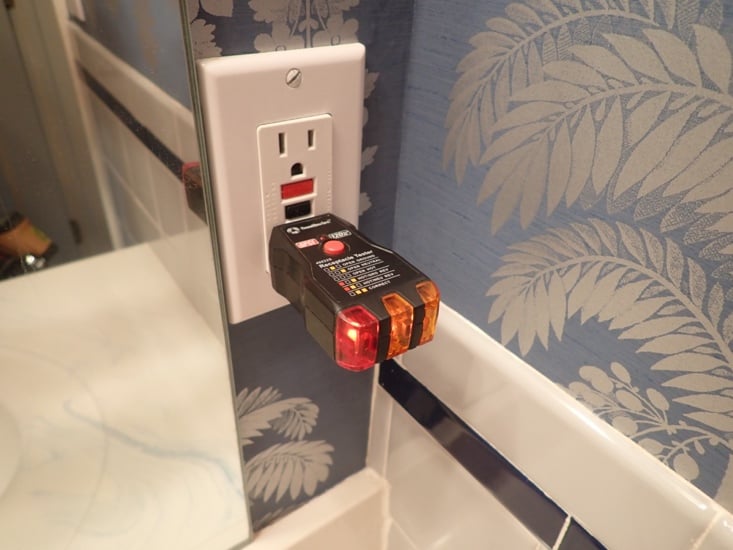
A three-prong outlet that tests as having no equipment ground—common in older homes with two-wire wiring. Here’s what it means, why it matters, and how it’s corrected.