Freestanding ranges that can tip forward when weight is applied to an open oven door—often because the anti-tip bracket is missing or the range is not hooked into it.
Anti-Tip Bracket
Range
Tip-Over Hazard
Kitchen Safety
Brandon Vaughn•Licensed Home Inspector
Published July 14, 2026 · Updated July 2026
Photographs and observations on this page come from a real home inspection, explained by a working inspector.
Direct Answer
Freestanding ranges should be secured with a properly installed anti-tip bracket so the appliance cannot tip forward when weight is placed on an open oven door. A missing bracket—or a bracket the range is not hooked into—is a tip-over hazard and should be corrected.
IMMEDIATE SAFETY CONCERN
This needs immediate attention.
Install or correctly engage the range anti-tip bracket per the manufacturer instructions, then confirm the range will not tip with the oven door open.
Until corrected, keep children from climbing on the oven door and avoid placing heavy loads on an open door.
Urgency
Immediate
Next step
Secure the range anti-tip bracket
Who to call
Licensed contractor
How to Identify It
Range tips forward when the oven door is open and moderate downward pressure is applied (careful test)
No anti-tip bracket visible when the range is pulled out for inspection
Bracket present on the wall/floor but range foot not engaged
Range sits far forward of the wall because the receptacle or cord prevents full seating
Installer left the bracket in the packaging / never mounted it
Why It’s Not Acceptable
Open oven doors create a leverage point. Children climbing or heavy pans on the door have caused tip-overs that spill hot contents and crush the person on the door.
Manufacturer instructions call for an anti-tip device. Seeing a bracket on the floor that the range misses is as important as finding no bracket at all—the protection only works when the range is engaged.
Photos show the bracket engagement. They do not replace confirming the range is stable after correction.
What a Proper Correction Should Accomplish
Install the manufacturer’s anti-tip bracket in the correct location
Engage the range rear foot (or specified attachment) into the bracket
Level the range so it sits stable and fully engaged
Correct receptacle/cord placement that keeps the range from seating against the wall
Verify the range no longer tips when the oven door is open
Do not rely on cabinets alone as anti-tip protection unless the manufacturer allows that method
Example From an Inspection
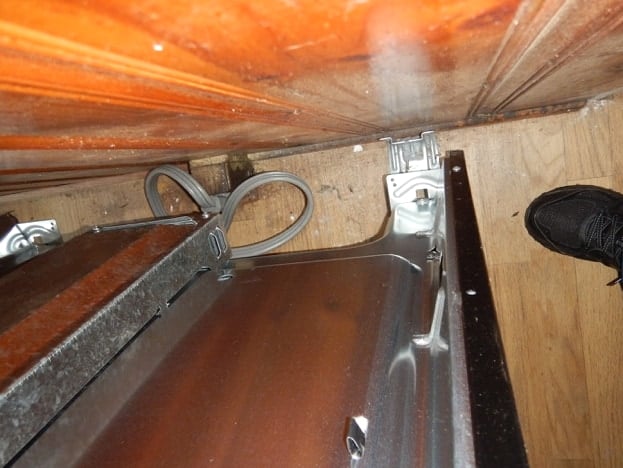
In a real inspection, an anti-tip bracket was present behind the range, but the range foot was not engaged in the bracket and the oven could tip forward. The report recommended leveling the range and securing it to the anti-tip device.
Anti-tip hardware is often brand- and model-specific. Confirm the part matches your range, or use the manufacturer’s specified bracket, and verify it is engaged after install.
As an Amazon Associate I earn from qualifying purchases. These are optional examples related to this topic—not an endorsement by Amazon, and not a substitute for a qualified professional when the repair calls for one.
A three-prong outlet that tests as having no equipment ground—common in older homes with two-wire wiring. Here’s what it means, why it matters, and how it’s corrected.
Gray steel water pipe common in homes built before the 1960s. It corrodes from the inside, restricts water flow, and eventually needs replacement—shown in real Upstate SC inspection findings.