Structure & Foundation
Improper Floor Joist Supports in a Crawlspace
Status Prompt Evaluation
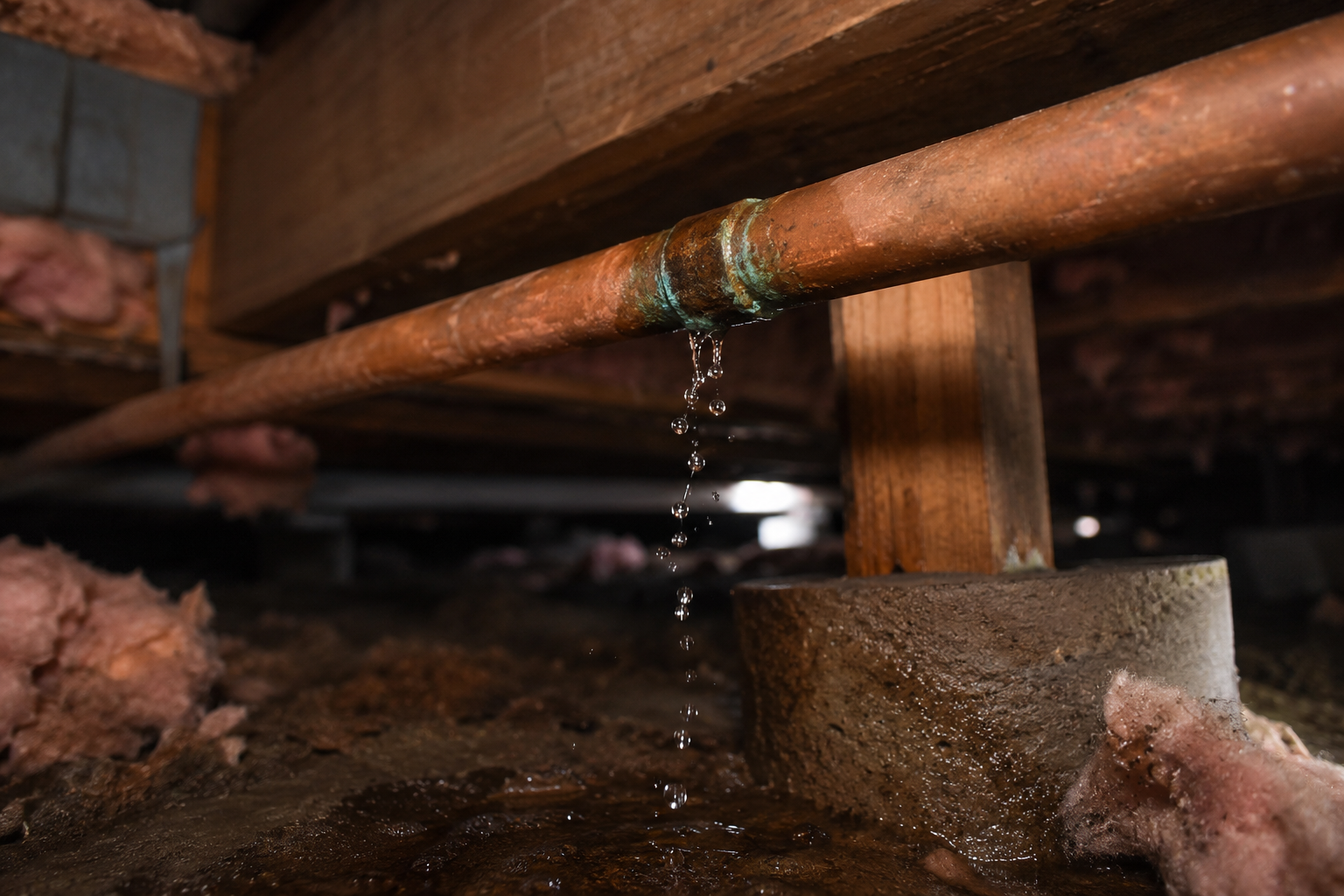
Severely damaged framing beneath a bathroom had been propped up with blocks, posts, shims, and added lumber instead of properly repaired.
View case fileTHE HOUSE FILES · Structure & Foundation
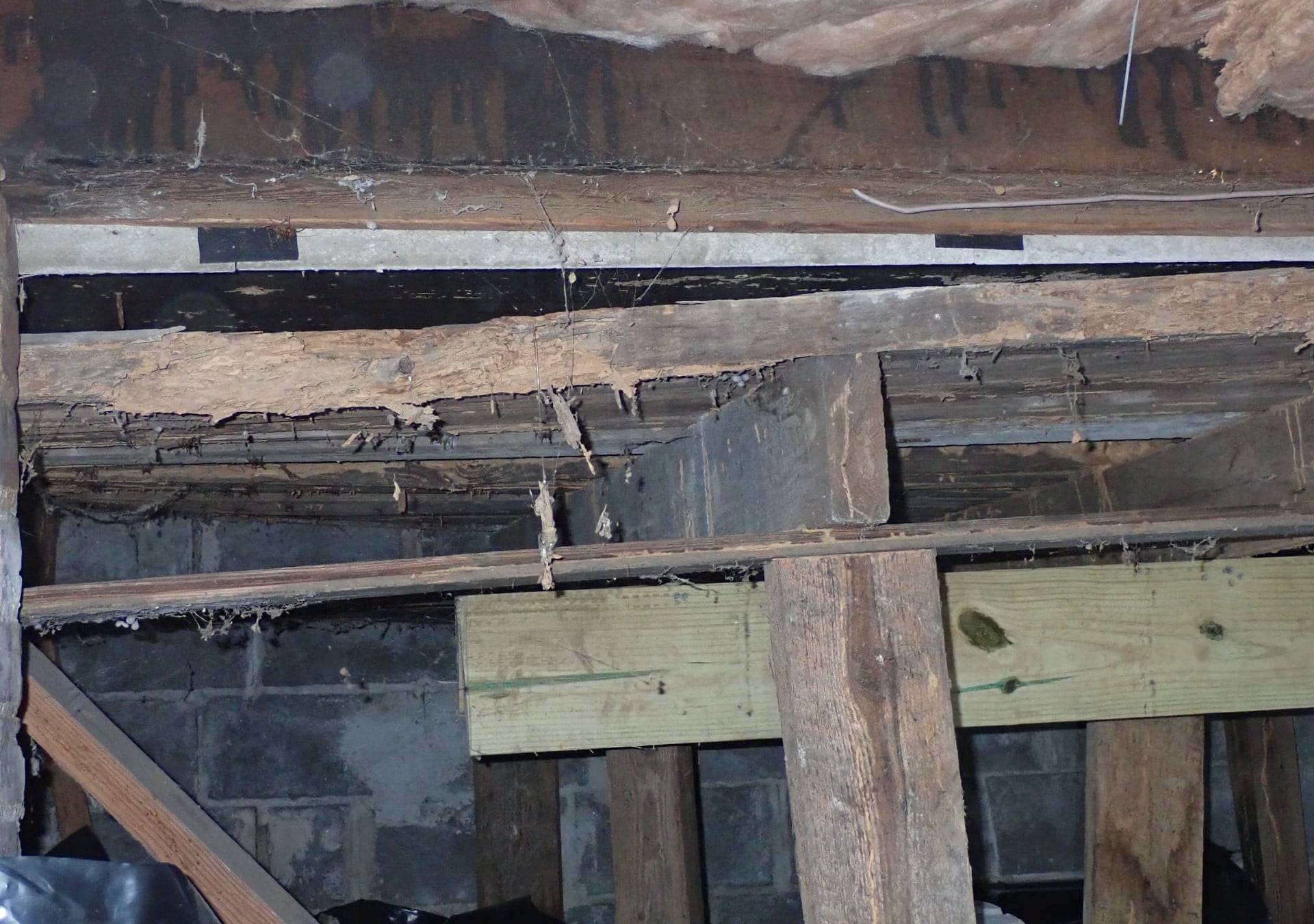
Substantial termite damage compromised a center floor joist; an added girder and jack posts supported the damaged wood rather than repairing it.
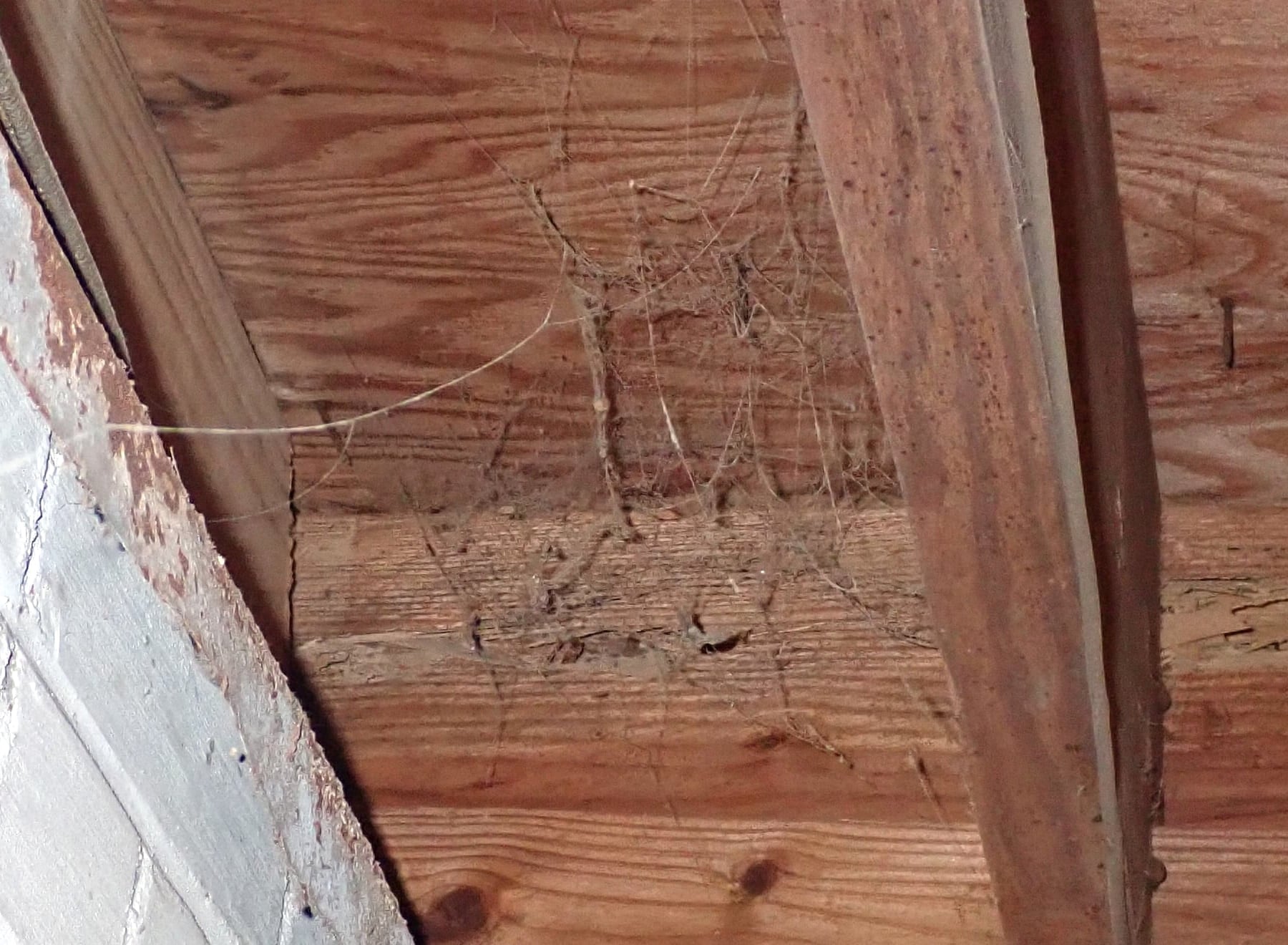
A joist with substantial termite damage cannot be assumed to retain its original structural capacity. Adding a girder or jack beneath it may reduce movement, but it does not replace the wood that was destroyed.
PROMPT EVALUATION
A joist with substantial termite damage should be evaluated for treatment needs and proper framing repair. Supporting damaged wood with a girder or jack is not the same as restoring structural capacity.
Floor joists depend on adequate remaining cross-section and sound bearing. Termite damage can remove internal wood while leaving portions of the exterior visible. Supporting the member does not automatically restore its strength or correct all damaged areas.
These photographs document wood loss and added supports. They do not, by themselves, prove whether infestation was still active at the time of inspection.
In this inspection, a center floor joist showed significant termite damage. A reinforced girder and floor jacks had been installed, but the report noted those supports were holding the damaged wood rather than repairing it. A licensed contractor was recommended to evaluate and repair the damaged wood, with pest-control evaluation as needed.
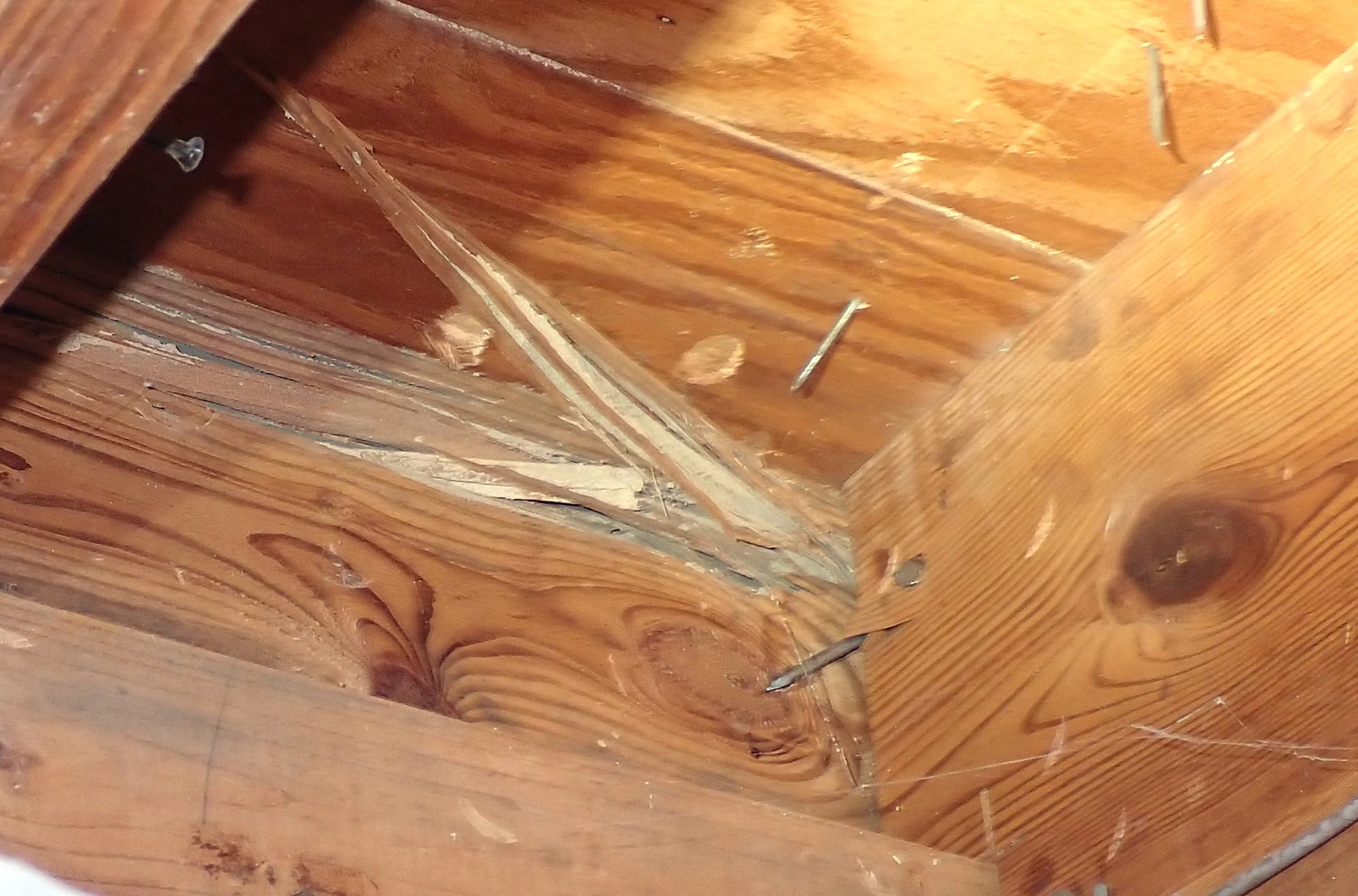
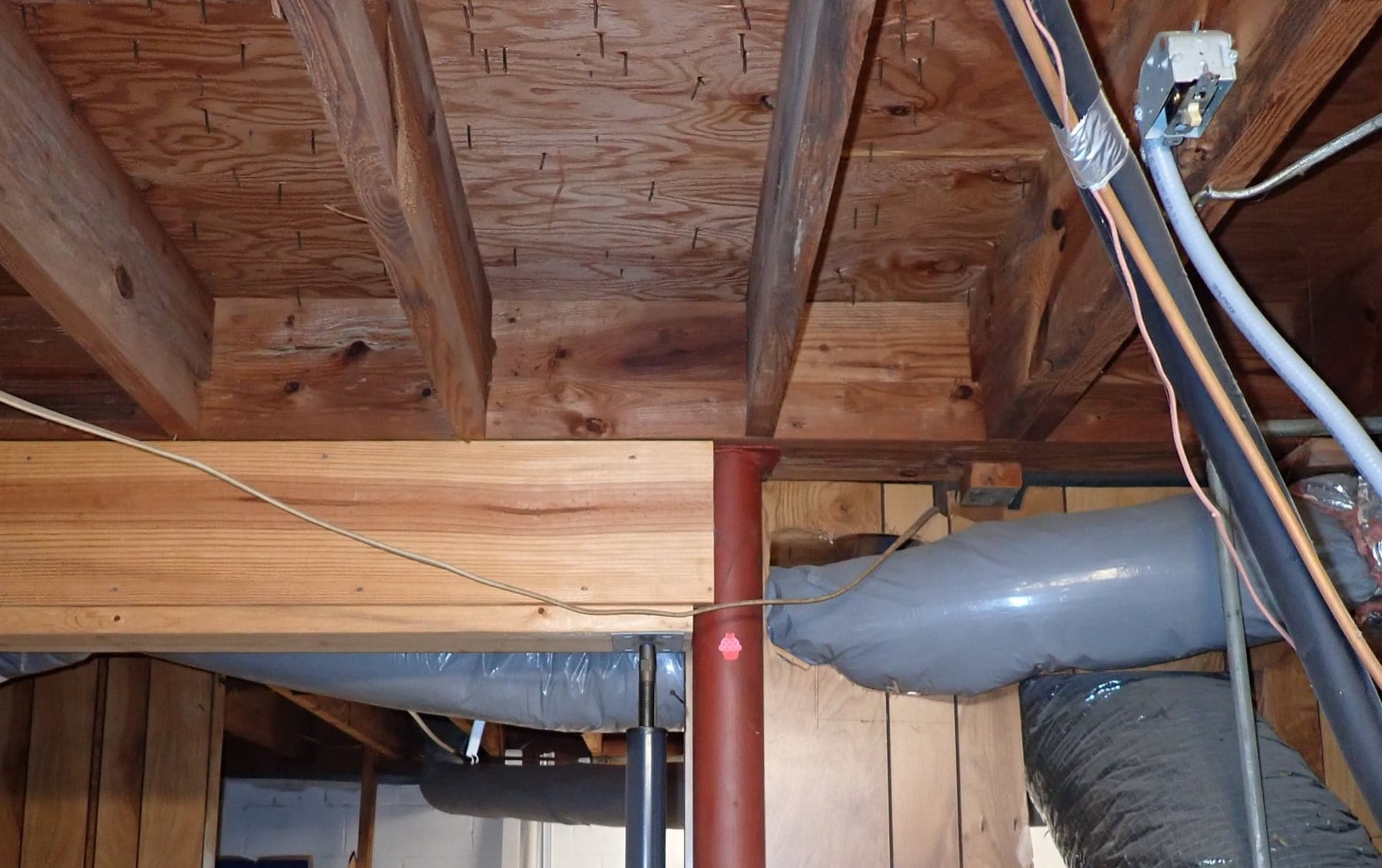
It depends on the extent of the damage. A joist with substantial termite damage cannot be assumed to retain its original strength, and simply adding support beneath it does not replace the wood that was destroyed. A qualified professional should determine whether it can be reinforced or must be replaced.
Sistering can be appropriate in some cases, but only when a qualified professional confirms the remaining and added members together provide adequate capacity and bearing. It is not automatically sufficient for heavily damaged framing.
No. For an inspector, the concern is identifying the damage and flagging when it appears structural so a qualified pest and/or structural professional can evaluate it. The extent and location determine how serious it is.
Structure & Foundation
Status Prompt Evaluation
Severely damaged framing beneath a bathroom had been propped up with blocks, posts, shims, and added lumber instead of properly repaired.
View case fileStructure & Foundation
Status Prompt Evaluation
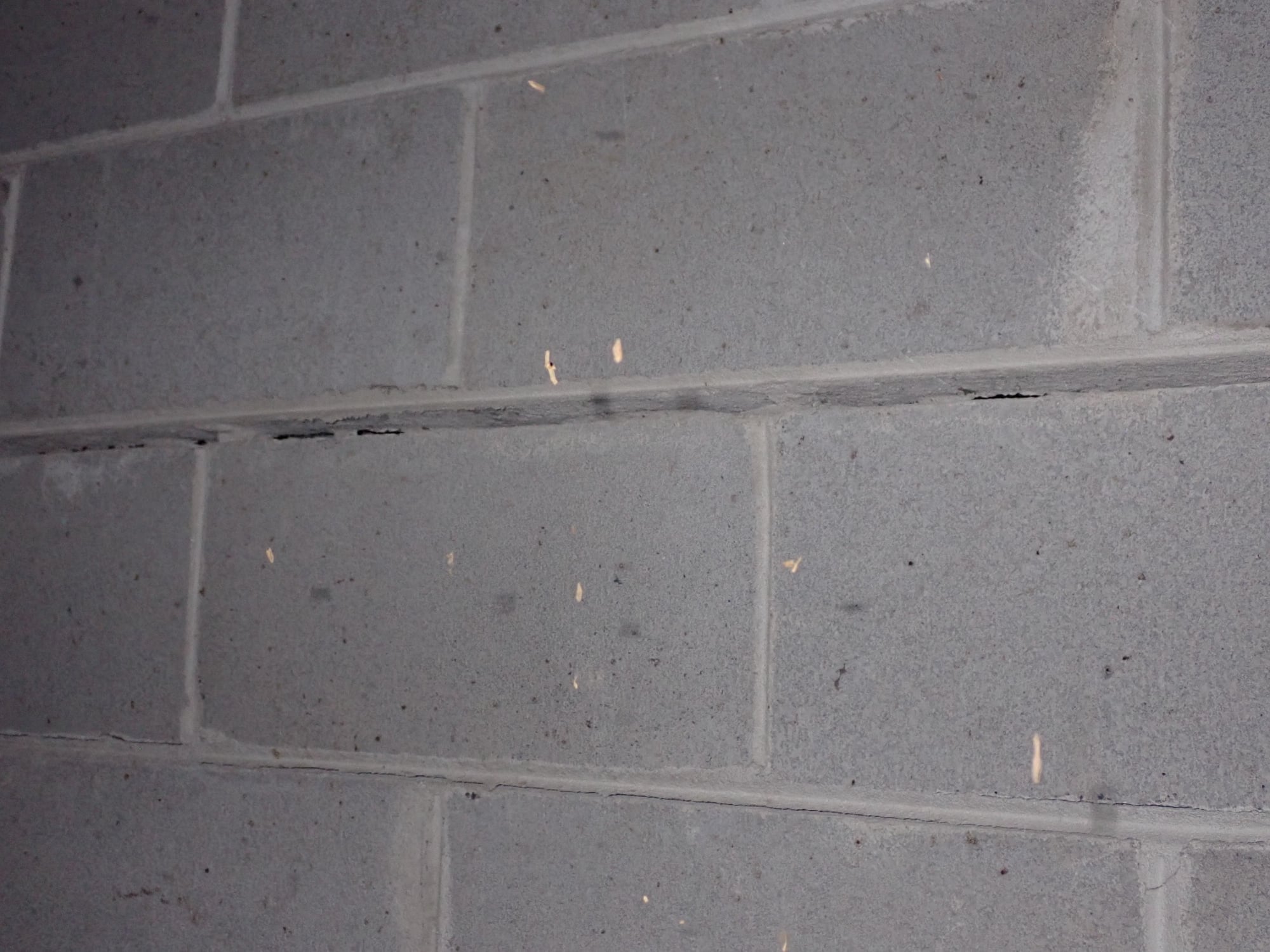
Horizontal separation and inward displacement in a concrete-block basement wall—reported as soil pressure pushing the wall inward.
View case fileElectrical
Status Plan for Correction
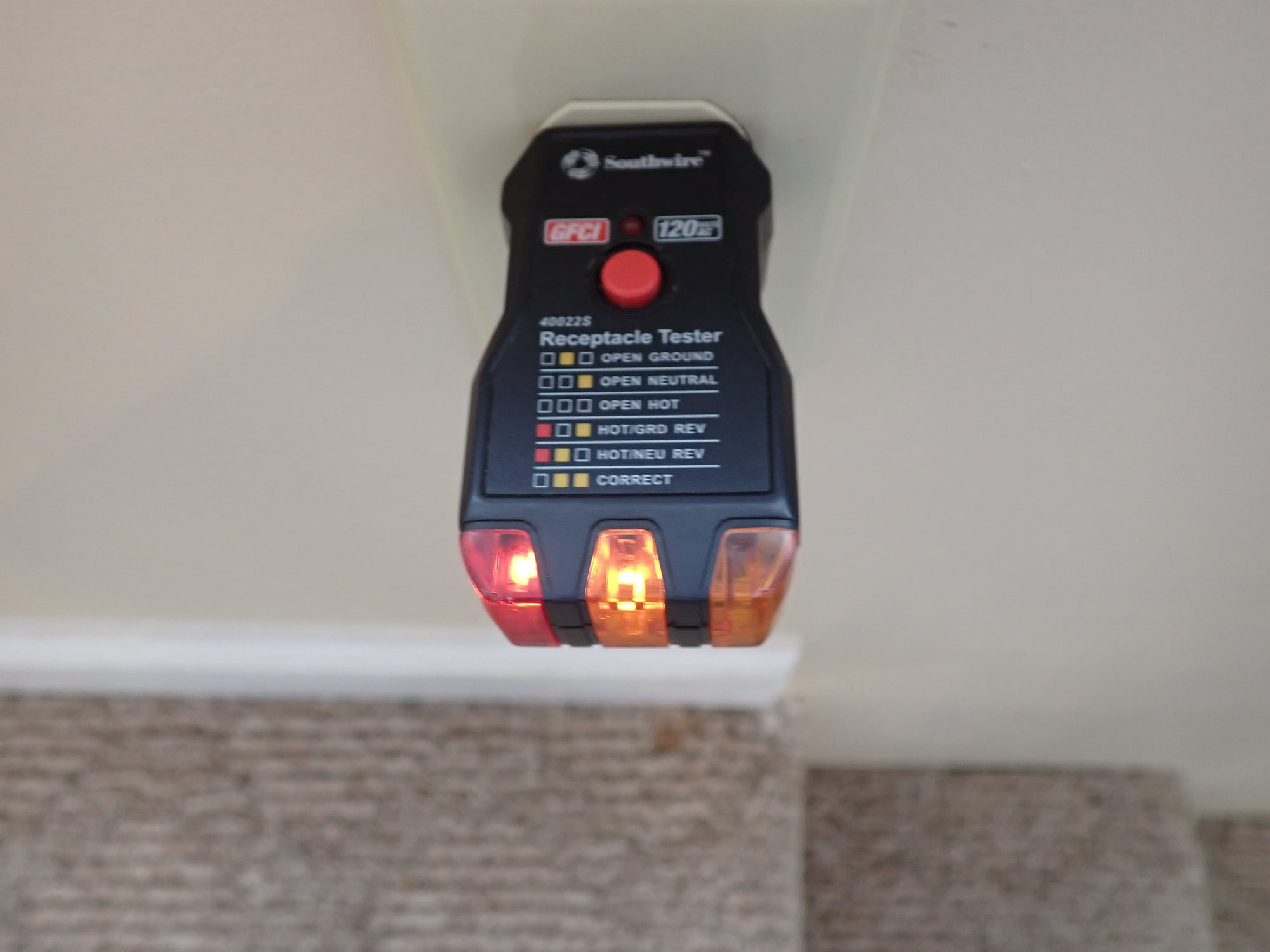
A plug-in tester reading of hot and neutral reversed—what it means, why it matters, and what a licensed electrician should correct.
View case fileElectrical
Status Plan for Correction
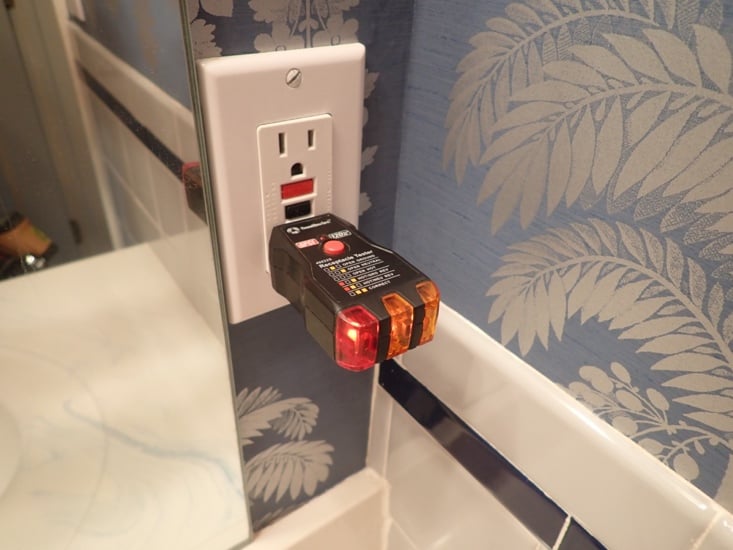
A three-prong outlet that tests as having no equipment ground—common in older homes with two-wire wiring. Here’s what it means, why it matters, and how it’s corrected.
View case filePlumbing
Status Plan for Correction
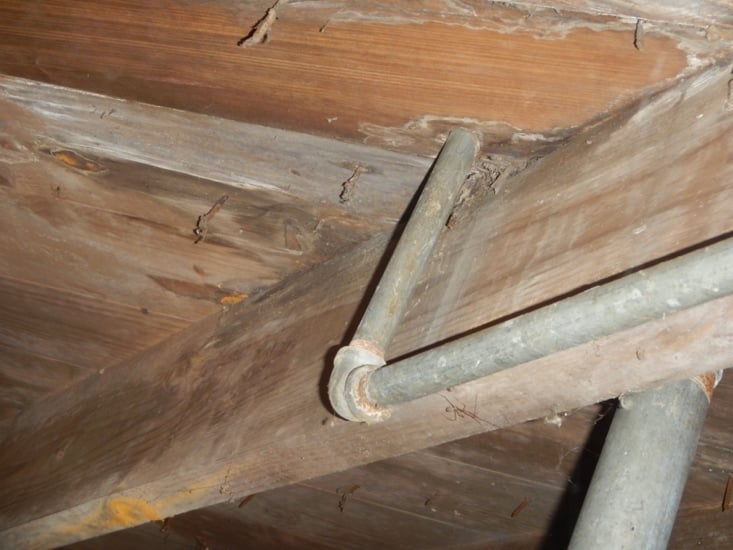
Gray steel water pipe common in homes built before the 1960s. It corrodes from the inside, restricts water flow, and eventually needs replacement—shown in real Upstate SC inspection findings.
View case fileArticle
The most common defects we document during home inspections — from water heaters and electrical issues to crawlspace damage.
Read moreArticle
Three reasons every homeowner, buyer, and seller should schedule a licensed home inspection.
Read more