Roofing & Attics
Missing Step Flashing at a Roof–Wall Intersection
Status Plan for Correction
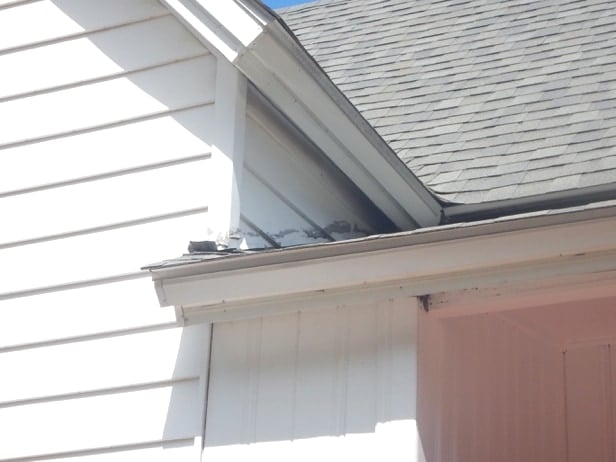
Where a roof meets a wall, missing or failed step flashing can let water slip behind the wall covering and into the framing.
View case fileTHE HOUSE FILES · Roofing & Attics
Without drip edge, water can wick into fascia and underlayment edges instead of shedding cleanly off the roof.
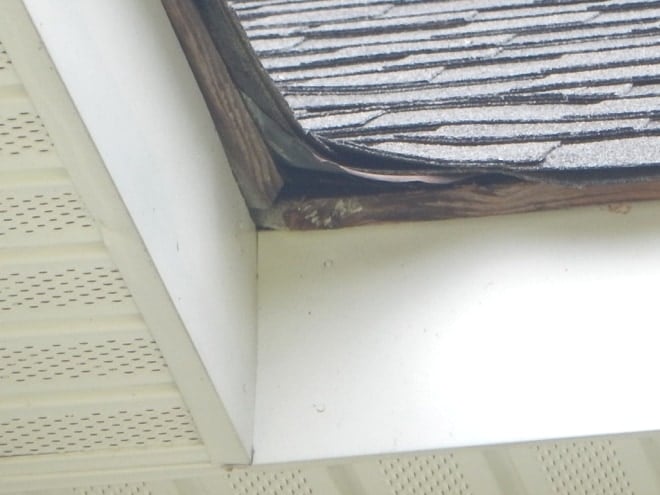
Drip edge (or an equivalent edge metal detail where required) helps roof runoff clear the fascia and protects underlayment edges. Missing, bent, or improperly installed drip edge at eaves and rakes can allow water to wet fascia, soffit, and edge materials and should usually be corrected during roof repair or reroofing.
PLAN FOR CORRECTION
Have a qualified roofing contractor evaluate eave and rake edges and install proper drip edge integrated with the roof covering. Repair any soft fascia or edge materials at the same time.
Edge metal helps keep water from curling under the roof covering and underlayment at the perimeter. When drip edge is missing or failing, fascia and edge materials can stay damp longer after storms, which encourages decay and finish failure.
Modern roofing practice commonly includes drip edge at eaves (and often rakes), installed in a sequence with underlayment that matches manufacturer instructions. Exact requirements vary by product, local code, and whether a re-cover or full tear-off is underway.
An edge detail problem does not automatically mean the whole roof covering has failed, but it is a real water-management gap at a vulnerable line of the building.
In a real inspection, the roof installation lacked proper drip edge at the roof deck edge. The report recommended installing drip edge to protect the edge of the roofing deck and related materials.
Roofing & Attics
Status Plan for Correction
Where a roof meets a wall, missing or failed step flashing can let water slip behind the wall covering and into the framing.
View case fileRoofing & Attics
Status Plan for Correction
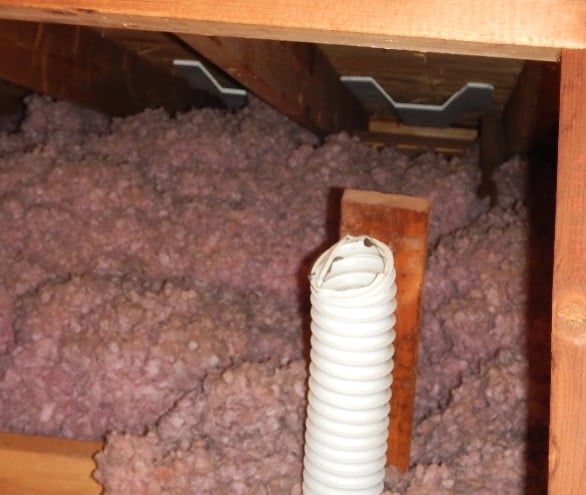
A bathroom exhaust fan that dumps moist air into the attic instead of outdoors can wet insulation and framing.
View case fileElectrical
Status Plan for Correction
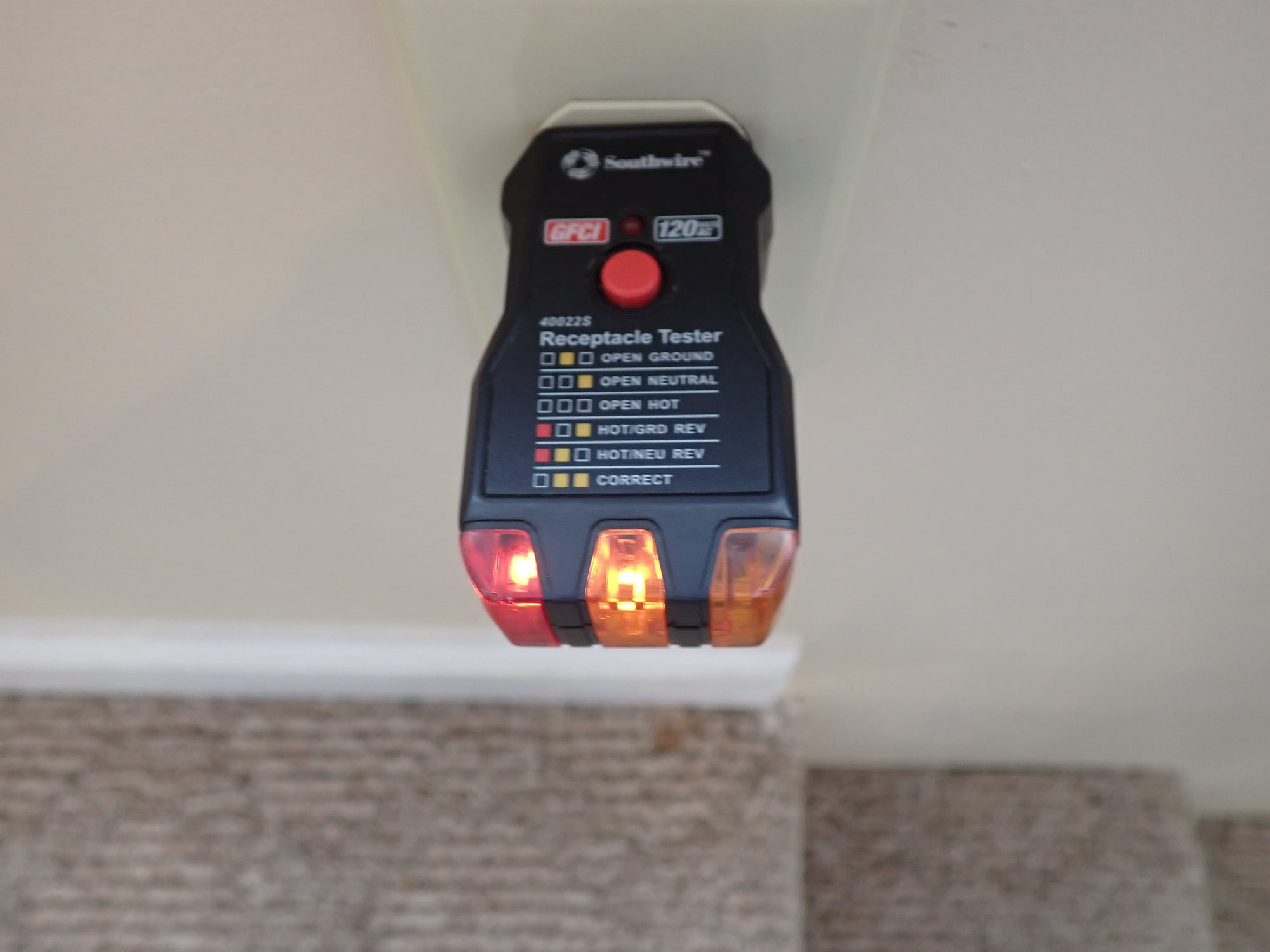
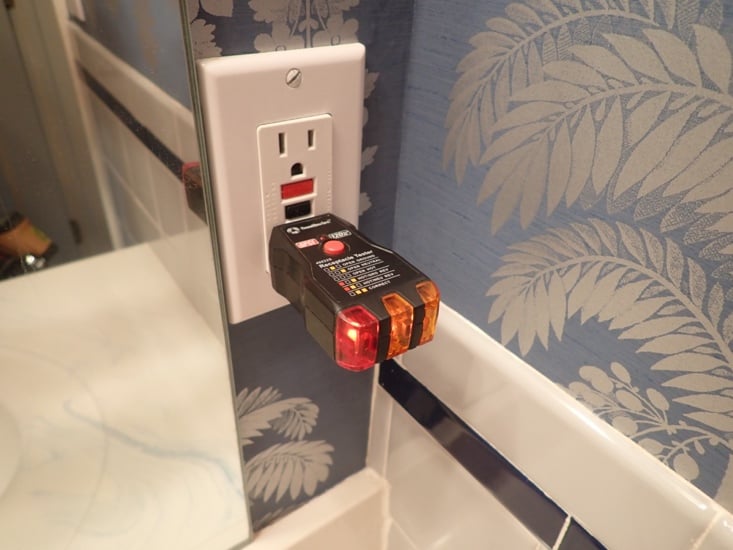
A plug-in tester reading of hot and neutral reversed—what it means, why it matters, and what a licensed electrician should correct.
View case fileElectrical
Status Plan for Correction
A three-prong outlet that tests as having no equipment ground—common in older homes with two-wire wiring. Here’s what it means, why it matters, and how it’s corrected.
View case filePlumbing
Status Plan for Correction
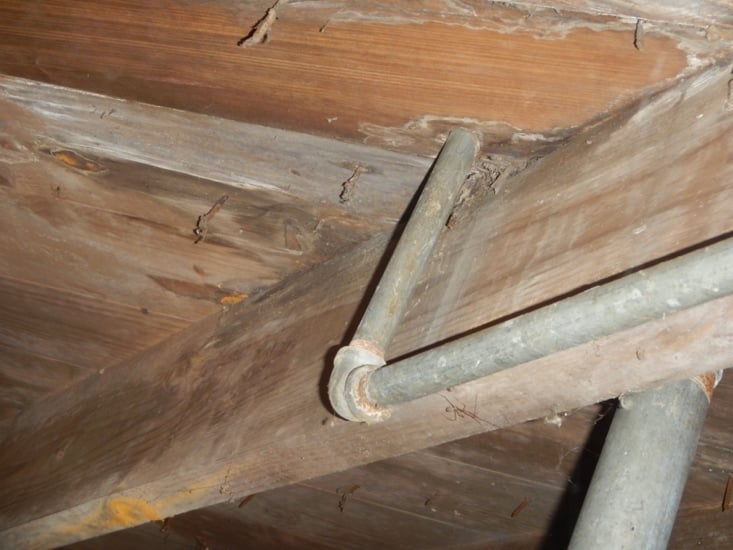
Gray steel water pipe common in homes built before the 1960s. It corrodes from the inside, restricts water flow, and eventually needs replacement—shown in real Upstate SC inspection findings.
View case fileArticle
The most common defects we document during home inspections — from water heaters and electrical issues to crawlspace damage.
Read more