Galvanized Water Supply Pipe: Why It Corrodes and When to Replace It
Gray steel water pipe common in homes built before the 1960s. It corrodes from the inside, restricts water flow, and eventually needs replacement—shown in real Upstate SC inspection findings.
Galvanized
Supply Piping
Corrosion
Older Homes
Water Flow
Brandon Vaughn•Licensed Home Inspector
Published July 20, 2026
Photographs and observations on this page come from a real home inspection, explained by a working inspector.
Direct Answer
Galvanized water pipe is steel pipe coated with zinc, common in homes built before the 1960s. Over the decades the zinc wears away and the steel corrodes from the inside out, which restricts water flow, can discolor the water, and eventually leaks. When we find galvanized supply piping we note its age and condition and recommend having a licensed plumber evaluate it and plan to replace it with an approved material such as copper, CPVC, or PEX.
PLAN FOR CORRECTION
This should be corrected.
Plan to have a licensed plumber evaluate the galvanized supply piping and replace what is in service. Because galvanized pipe corrodes from the inside and its remaining life is hard to judge by appearance, replacement is the long-term fix — prioritized where flow is restricted or leaks appear.
Urgency
Plan correction
Next step
Have a licensed plumber evaluate flow and plan replacement
Who to call
Licensed plumber and Licensed contractor
How to Identify It
Dull gray, threaded steel pipe — it looks like steel plumbing rather than copper or plastic, and a magnet will stick to it
Most common in homes built before the 1960s, and sometimes in later additions or repairs
Rust staining, mineral crust, or corrosion built up at threaded joints and fittings
Reduced water flow or pressure, especially at fixtures farthest from the meter, as the inside of the pipe closes up
Discolored, brownish water — particularly noticeable after the water has sat for a while
Often spliced to newer copper, CPVC, or PEX where sections were replaced over the years
Why Further Evaluation Is Needed
Galvanized pipe is steel coated in zinc. The zinc eventually erodes and the exposed steel rusts from the inside, so the pipe slowly closes up with corrosion and mineral scale. That reduces water flow and pressure, can give the water a rusty color, and eventually leads to pinhole leaks and failures at corroded threads. Because the outside of a galvanized pipe can look sound while the inside is badly restricted, its remaining life is hard to judge by appearance alone.
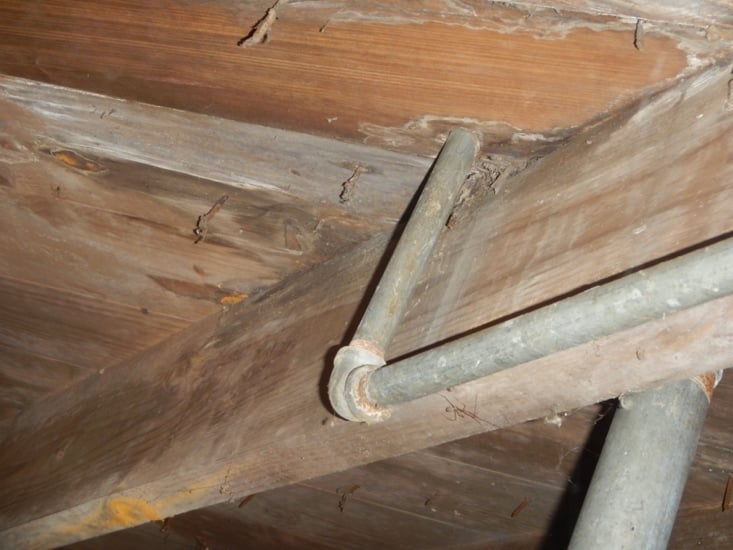
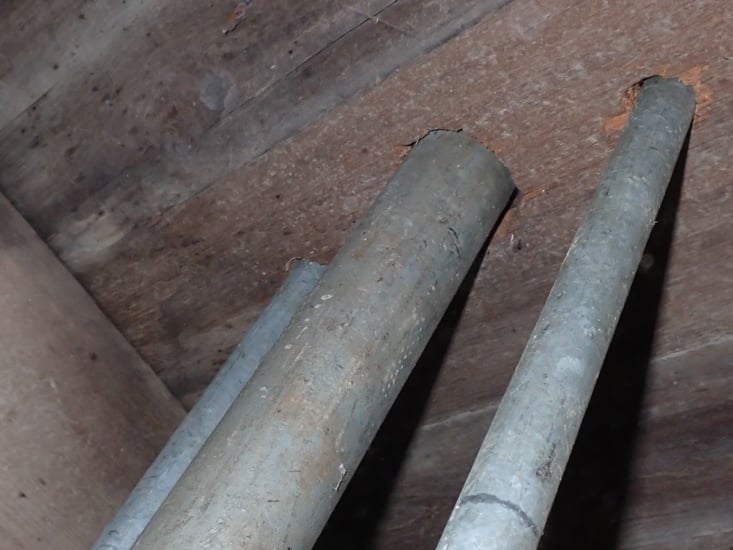
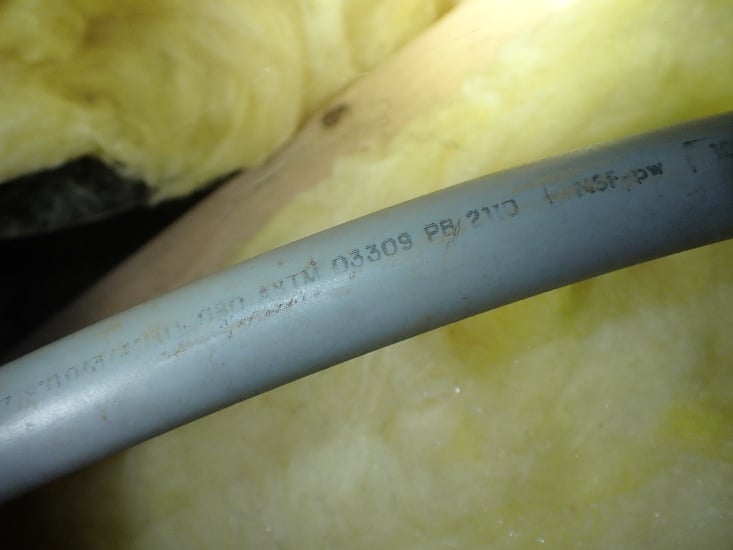
These photographs show galvanized supply piping and its condition from real inspections. They document the material that is present; they do not, by themselves, prove the exact remaining wall thickness or interior condition of the pipe.
What a Proper Correction Should Accomplish
Have a licensed plumber evaluate the galvanized piping, its age, and how much remains in service
Check water flow and pressure at fixtures and look for rust staining, leaks, and prior repairs
Plan to replace in-service galvanized supply piping with an approved material such as copper, CPVC, or PEX
Pay attention to transitions where galvanized meets copper, since dissimilar metals can accelerate corrosion at the joint
Address any moisture damage found from past leaks
Who Should Evaluate or Repair It
Plumber
Licensed contractor
Example From an Inspection
We find galvanized supply piping regularly in older homes. In one home the galvanized supply had corroded enough to restrict water flow at the tub and sink, and we recommended the affected piping be replaced. In others the galvanized was still flowing with no active leaks, so we noted its age and limited remaining life and recommended monitoring it and planning for replacement. We also frequently see galvanized that was partly replaced over the years — old galvanized spliced to newer CPVC or copper — with corroded or leaking transition fittings between the two.
Evidence From the Inspection
Aging galvanized supply pipe. The steel corrodes from the inside over time, so the outside can look sound while flow is restricted within.
Frequently Asked Questions
How do I know if I have galvanized pipes?
Galvanized supply pipe is dull gray, threaded steel — it looks like metal plumbing rather than copper or plastic, and a magnet will stick to it. It is most common in homes built before the 1960s. Signs of trouble include rust staining at the fittings, brownish water, and reduced flow at the fixtures farthest from the meter. A licensed plumber can confirm the material and check the actual water flow.
Do galvanized pipes need to be replaced?
Over time, generally yes. Galvanized pipe has a limited service life and corrodes from the inside, so flow slowly drops and leaks eventually develop. We recommend having a licensed plumber evaluate the system and plan to replace the in-service galvanized piping with an approved material such as copper, CPVC, or PEX — prioritizing areas where flow is restricted or leaks have appeared.
Is galvanized pipe safe to drink from?
Corrosion and rust inside old galvanized pipe can affect water quality and appearance, and older galvanized systems can accumulate sediment and metals over the years. If you are concerned, it is reasonable to have the water tested, use filtration on drinking-water sources, or plan to replace the piping. A licensed plumber can advise based on the specific system.
Why is my water pressure low with galvanized pipes?
Galvanized pipe corrodes and builds up mineral scale on the inside, which gradually narrows the opening the water flows through. After several decades the effective diameter can shrink significantly, so flow and pressure drop — usually worst at the fixtures farthest from the water meter and often noticeable when more than one fixture runs at once.
Can I buy a house with galvanized plumbing?
Galvanized plumbing is not automatically a dealbreaker, but you should plan for it. We recommend getting a licensed plumber's evaluation and a replacement estimate so you can budget, and checking flow at the fixtures. Homes that mix old galvanized with newer CPVC, copper, or PEX are common, and the transition fittings between dissimilar materials deserve a closer look.
A gray (sometimes blue) plastic water-supply pipe used from the late 1970s into the mid-1990s, no longer used in new construction and known to fail—often without warning. We still find it regularly in Upstate crawlspaces.
Real inspection examples of missing pipes, crawlspace terminations, pan-only drains, and a leaking discharge stub—and what proper piping should accomplish.
A three-prong outlet that tests as having no equipment ground—common in older homes with two-wire wiring. Here’s what it means, why it matters, and how it’s corrected.