Polybutylene Pipe: What It Is, How to Identify It, and Why It Fails
A gray (sometimes blue) plastic water-supply pipe used from the late 1970s into the mid-1990s, no longer used in new construction and known to fail—often without warning. We still find it regularly in Upstate crawlspaces.
Polybutylene
PB Piping
Poly-B
Supply Piping
Crawlspace
Brandon Vaughn•Licensed Home Inspector
Published July 20, 2026
Photographs and observations on this page come from a real home inspection, explained by a working inspector.
Direct Answer
Polybutylene (PB) is a plastic water-supply pipe — usually gray, sometimes blue or black — installed in many homes from about 1978 into the mid-1990s. It is no longer used in new construction because it can become brittle and fail, often at the fittings and often without warning. When we find polybutylene supply piping, we recommend having a licensed plumber evaluate it and plan to replace it, even when it is not currently leaking.
PLAN FOR CORRECTION
This should be corrected.
Plan to have a licensed plumber evaluate the polybutylene supply piping and replace what is in service. Because PB can fail suddenly, replacement is generally recommended even when there is no active leak.
Urgency
Plan correction
Next step
Have a licensed plumber evaluate and plan replacement
Who to call
Licensed plumber and Licensed contractor
How to Identify It
Gray plastic supply pipe (most common); polybutylene was also produced in blue and black
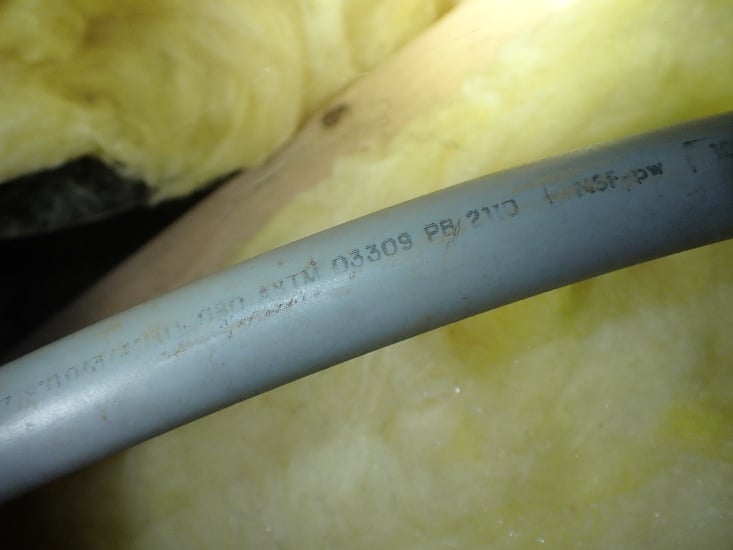
A stamped code such as "PB2110" printed along the pipe
Roughly 1/2" or 3/4" flexible tubing, often joined with copper crimp rings or plastic (acetal) insert fittings
Often used to plumb a home's entire water-supply system, so it can turn up anywhere the piping is visible — in the crawlspace or basement, at the water heater, and at fixtures
Most common in homes built from about 1978 into the mid-1990s
Sometimes only partly replaced — PB mixed with newer CPVC or PEX, with abandoned PB left in place
Why It’s Not Acceptable
Polybutylene and its plastic fittings can react with chlorine and other oxidants found in normal treated water. Over time the material can flake and grow brittle from the inside, then crack or separate at a fitting — frequently with little or no warning. After widespread failures and a large class-action settlement in the 1990s, it was phased out and is no longer used or recognized for potable water supply in new construction.
These photographs show the pipe and its markings from real inspections. They document the material that is present; they do not, by themselves, prove the exact remaining condition inside the pipe.
What a Proper Correction Should Accomplish
Have a licensed plumber confirm the piping is polybutylene and determine how much is still in service
Check for active leaks, prior repairs, and any resulting water damage
Plan full replacement of in-service PB supply piping with an approved material such as PEX, CPVC, or copper
Remove or properly isolate abandoned or disconnected PB where feasible
Address any moisture damage found from past leaks
Who Should Evaluate or Repair It
Plumber
Licensed contractor
Example From an Inspection
We find polybutylene regularly. On one inspection the entire water-supply system was polybutylene — identifiable by the "PB2110" stamp on the gray pipe — with no active leaks, but we recommended it be addressed. In other homes we have documented PB actively leaking at a crawlspace fitting, a leak beneath a bathroom, and houses where the PB had been partly replaced with CPVC or PEX while abandoned polybutylene remained. On well water the chlorine reaction is less of a factor, but we still note the material and its failure history.
Evidence From the Inspection
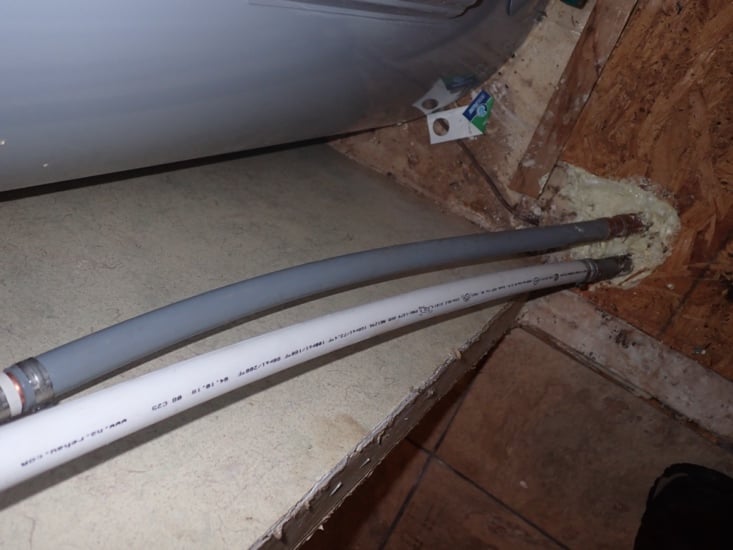
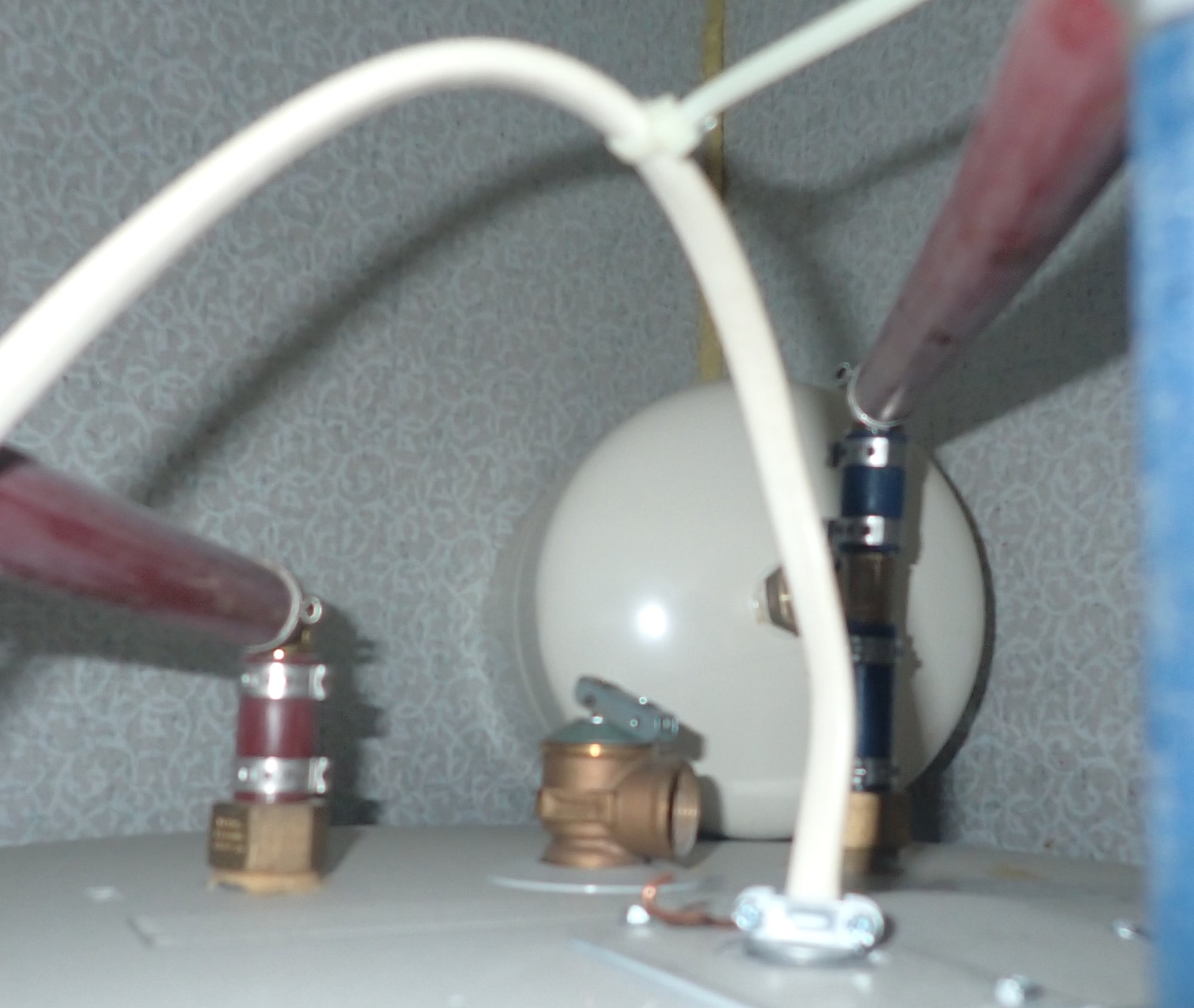
Gray polybutylene supply line (upper) beside newer white piping near the water heater.
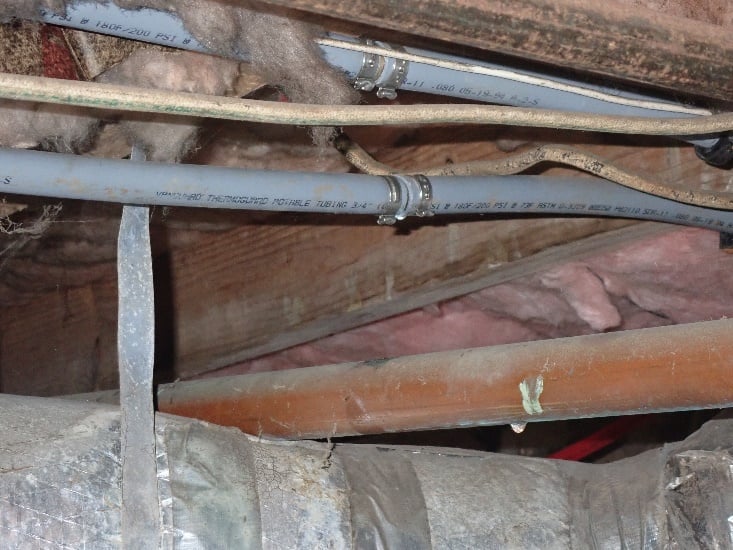
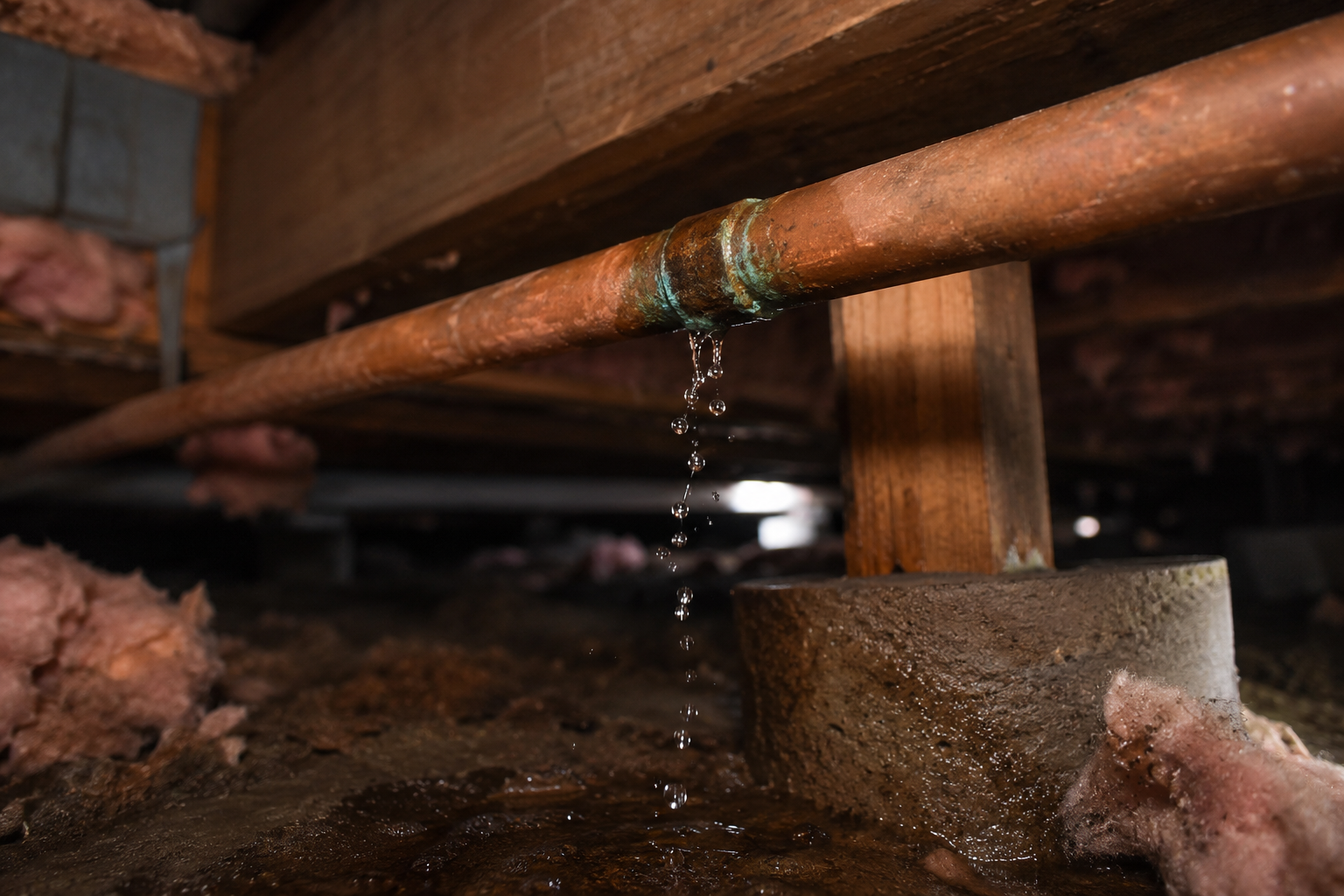
Gray polybutylene supply piping running through a crawlspace — one of many places we find it.
Frequently Asked Questions
What does polybutylene pipe look like?
Polybutylene is a flexible plastic supply pipe, most often gray (it was also made in blue and black), usually 1/2" or 3/4" in size. Many pipes are stamped with a code such as "PB2110," and they are typically joined with copper crimp rings or plastic insert fittings. In our area it is most often visible in the crawlspace, where the main water line enters, and near the water heater.
Should polybutylene pipes be replaced?
Generally, yes. Polybutylene is a discontinued material with a well-documented history of failing at the fittings and along the pipe, often without warning. We recommend having a licensed plumber evaluate the system and plan to replace the in-service PB with an approved material such as PEX, CPVC, or copper — even if it is not leaking at the moment.
Is polybutylene pipe the same as PEX?
No. Both are flexible plastic, but they are different materials. PEX (cross-linked polyethylene) is a current, approved supply material and is usually white, red, or blue and labeled "PEX." Polybutylene was discontinued and is usually gray with a "PB2110" stamp. It is common to see PB that was partly replaced with PEX or CPVC, with some original polybutylene left in place.
Why was polybutylene pipe discontinued?
Polybutylene and its plastic fittings can react with chlorine and other oxidants in ordinary treated water, becoming brittle over time and failing — often suddenly — at the connections. After widespread leak claims and a large class-action settlement in the 1990s, manufacturers stopped producing it and it was removed from plumbing codes. It is no longer used or approved for potable water supply in new construction.
Should I buy a house with polybutylene pipes?
Polybutylene is not necessarily a dealbreaker, but you should plan for it. We recommend getting a licensed plumber's evaluation and a replacement quote so you can budget for it, and checking with your insurer, since some carriers ask about polybutylene supply piping. The practical goal is a plan to replace the in-service PB before it fails.
Gray steel water pipe common in homes built before the 1960s. It corrodes from the inside, restricts water flow, and eventually needs replacement—shown in real Upstate SC inspection findings.
Real inspection examples of missing pipes, crawlspace terminations, pan-only drains, and a leaking discharge stub—and what proper piping should accomplish.
A three-prong outlet that tests as having no equipment ground—common in older homes with two-wire wiring. Here’s what it means, why it matters, and how it’s corrected.