A plug-in tester reading of hot and neutral reversed—what it means, why it matters, and what a licensed electrician should correct.
Reversed Polarity
Hot Neutral Reversed
Outlet Tester
Receptacle
GFCI
Brandon Vaughn•Licensed Home Inspector
Published September 14, 2026
Photographs and observations on this page come from a real home inspection, explained by a working inspector.
Direct Answer
Reversed polarity means the hot and neutral wires at an outlet are swapped. A plug-in receptacle tester shows it as “HOT/NEU REV” — on a typical three-light tester, that is the two yellow lamps, with the “correct” lamp off. The outlet may still power a lamp or a phone charger, so nothing looks obviously wrong. The slot that should be the grounded/neutral side is actually hot. That is a wiring error. It is not usually an immediate emergency like a burning wire in a panel, but it should be corrected by a licensed electrician.
PLAN FOR CORRECTION
This should be corrected.
Have a licensed electrician evaluate the outlets that test as reversed polarity and correct the wiring. Do not rewire the receptacle yourself based on the tester lights alone — the tester tells you the condition, not which wire is which in the box.
Do not open the outlet or swap wires unless you are a qualified electrician. The tester confirms reversed polarity; correcting it means working on energized connections.
Urgency
Plan correction
Next step
Have a licensed electrician correct the reversed hot and neutral connections
Who to call
Licensed electrician
How to Identify It
A plug-in receptacle tester reads HOT/NEU REV (two yellow lamps on a typical three-light tester; the “correct” lamp stays off)
The outlet still powers a device, so the problem is easy to miss without a tester
It can be one miswired receptacle (stairs, kitchen, porch) or several outlets on the same circuit
Sometimes it shows up together with open grounds or other tester faults in the same house
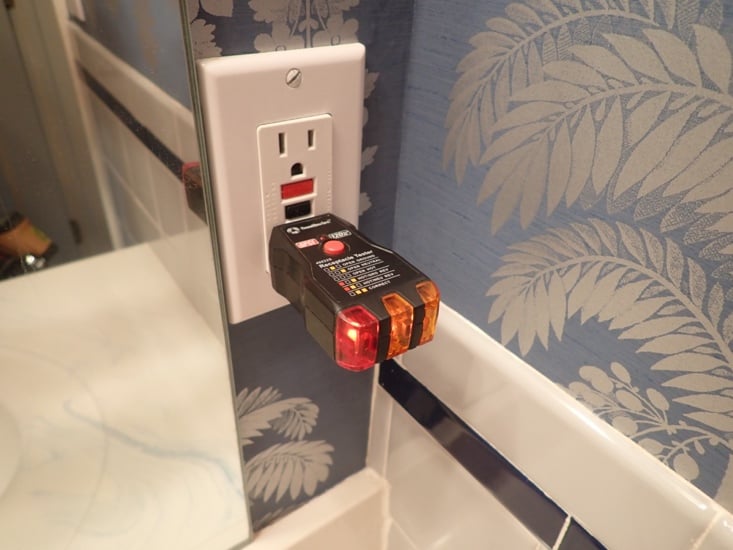
Exterior GFCI outlets can show the same reading if they were wired with hot and neutral reversed
Why Further Evaluation Is Needed
Hot and neutral have a job: the brass (hot) side of the receptacle is supposed to be the energized conductor, and the silver (neutral) side is supposed to be the grounded conductor. When those are reversed, the part of a lamp, appliance, or switch that people treat as “off” or “neutral” can still be energized. Some electronics and GFCI devices also expect correct polarity.
These photographs are from real inspections. The tester reading is the evidence; a licensed electrician opens the box and puts the conductors on the correct terminals.
What a Proper Correction Should Accomplish
Have a licensed electrician confirm the tester reading at the affected outlets
Correct the hot and neutral connections so polarity matches the receptacle (and any GFCI) as designed
Re-test the outlet after the repair — the tester should read correct, not HOT/NEU REV
Check nearby outlets on the same circuit for the same fault, and for related issues such as an open ground
Example From an Inspection
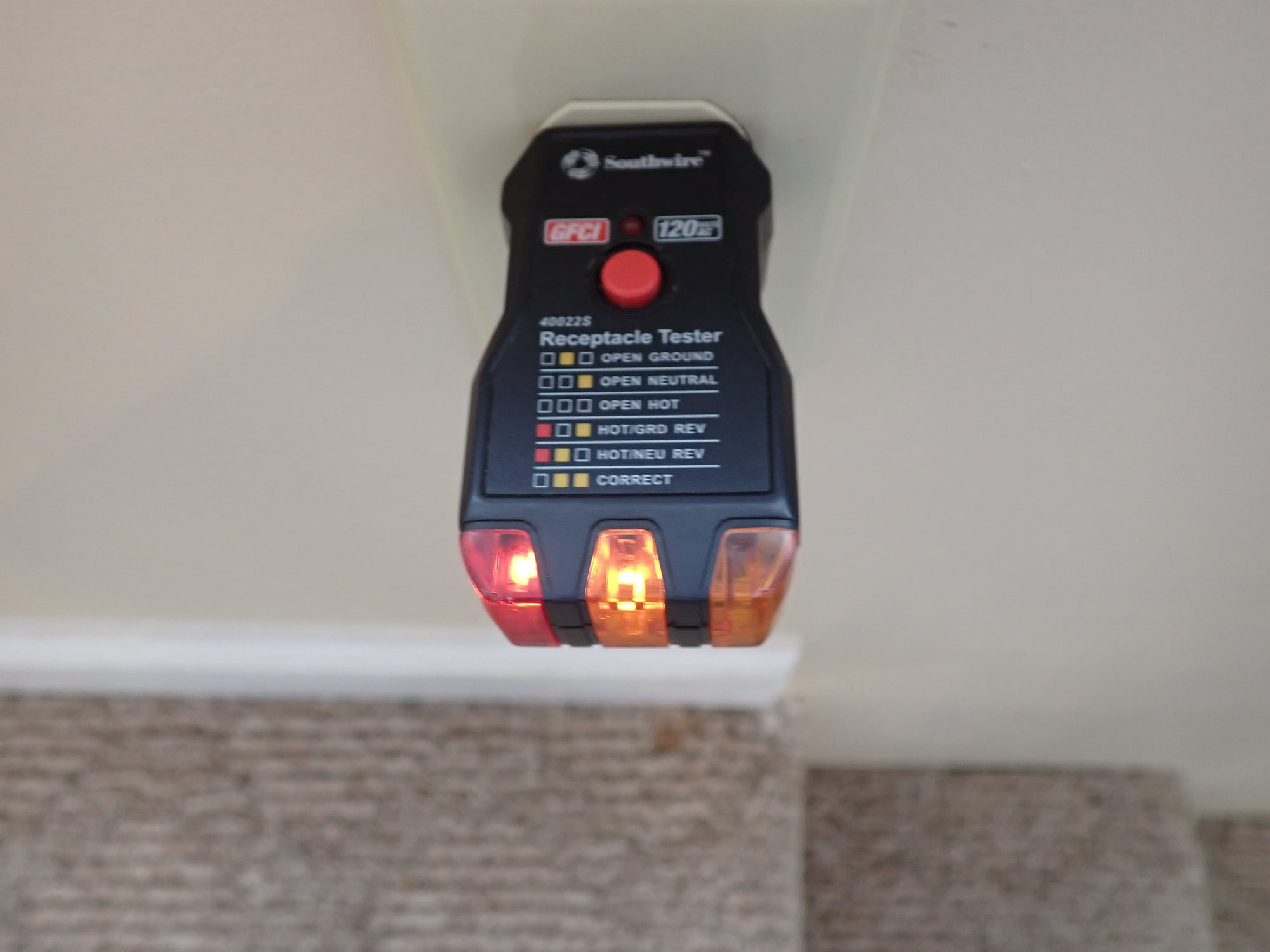
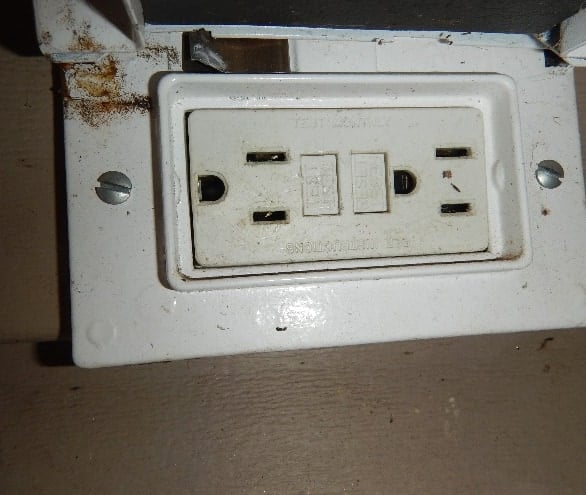
Reversed polarity is a regular receptacle-tester finding. Sometimes it is a single outlet — a stair landing, a kitchen counter beside the refrigerator, a porch receptacle. Sometimes several outlets in the home share the fault, often mixed with open grounds. We photograph the tester reading and recommend a licensed electrician correct the wiring. The indoor photograph here is the classic teaching case: the legend is readable, and the two yellow lamps match HOT/NEU REV. The outdoor photograph shows the same lamp pattern on an exterior GFCI.
Evidence From the Inspection
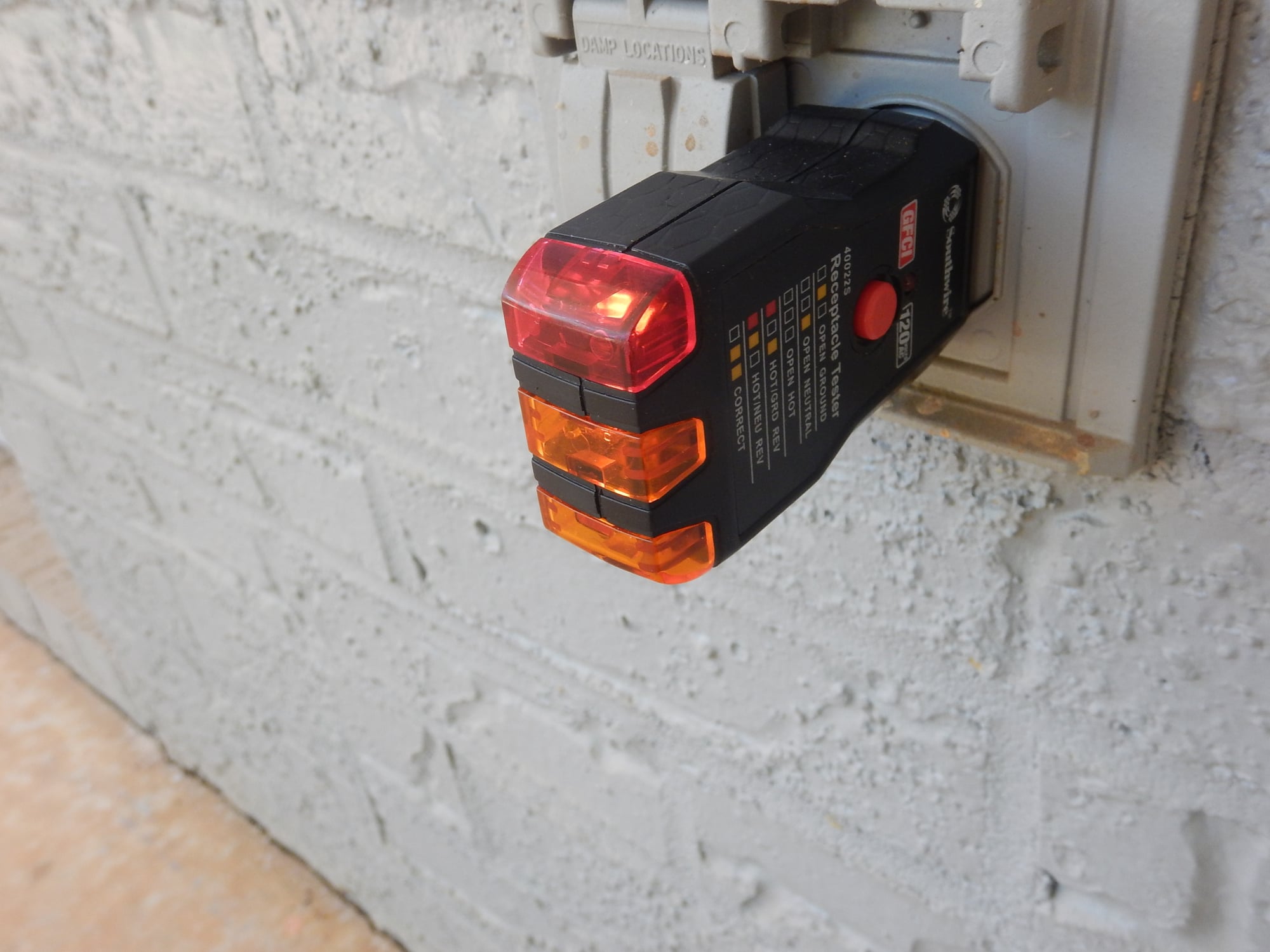
Reversed polarity is not only an indoor finding. This exterior GFCI still powered the tester, and the lamp pattern matched hot/neutral reverse — the same wiring error, outdoors.
Frequently Asked Questions
What does reversed polarity mean on an outlet?
It means the hot and neutral wires at that receptacle are swapped. A plug-in tester labels it HOT/NEU REV or “hot/neutral reverse.” The outlet can still run a lamp or a charger, which is why it gets missed without a tester. The opening that should be the grounded/neutral side is actually the hot side.
Is reversed polarity dangerous?
It is a wiring error, not a normal condition. It is usually not an immediate fire like a burning wire in a panel, but it is not harmless: parts of a fixture or appliance that should be neutral can be hot, and some devices expect correct polarity. We report it as something a licensed electrician should correct — not as something to ignore because the outlet “works.”
What does the tester show for reversed polarity?
On a common three-light receptacle tester, reversed polarity is two yellow lamps on and the remaining lamp off (the “correct” indication is a different pair). Open ground is a different pattern — usually a single yellow lamp. That is why reversed polarity and an open ground are separate House Files: the tester is telling you two different wiring problems.
What causes reversed polarity?
Someone landed the hot and neutral conductors on the wrong terminals — during an outlet replacement, a remodel, or original wiring. It can be one box or several on a circuit. An electrician opens the receptacle, identifies the conductors, and puts them on the correct terminals.
How is reversed polarity fixed?
A licensed electrician corrects the connections at the affected receptacles so hot is on the hot terminal and neutral is on the neutral terminal, then re-tests. If several outlets fail, they check the circuit, not just the one you noticed. Swapping wires yourself from a tester photo is not a substitute for that evaluation.
Is reversed polarity the same as an open ground?
No. An open ground means the grounding slot is not connected. Reversed polarity means hot and neutral are swapped. Both show up on the same plug-in tester, and both can appear in older homes, but they are different faults and need different corrections. See the open-ground House File for the ungrounded-outlet reading.
The same class of plug-in tester we use to distinguish reversed polarity from an open ground or a correct circuit. A tester confirms the condition; a licensed electrician still has to correct the wiring.
As an Amazon Associate I earn from qualifying purchases. These are optional examples related to this topic—not an endorsement by Amazon, and not a substitute for a qualified professional when the repair calls for one.
A three-prong outlet that tests as having no equipment ground—common in older homes with two-wire wiring. Here’s what it means, why it matters, and how it’s corrected.